
According to Al Jazeera, the British government's Be Ready campaign, launched on 22 October, asks households in England and Wales to cope alone for three days if power, water and phones fail. In the ten days after launch, bottled water sales rose 67 percent, tinned food 37 percent and hand sanitiser 83 percent, Worldpanel by Numerator found.
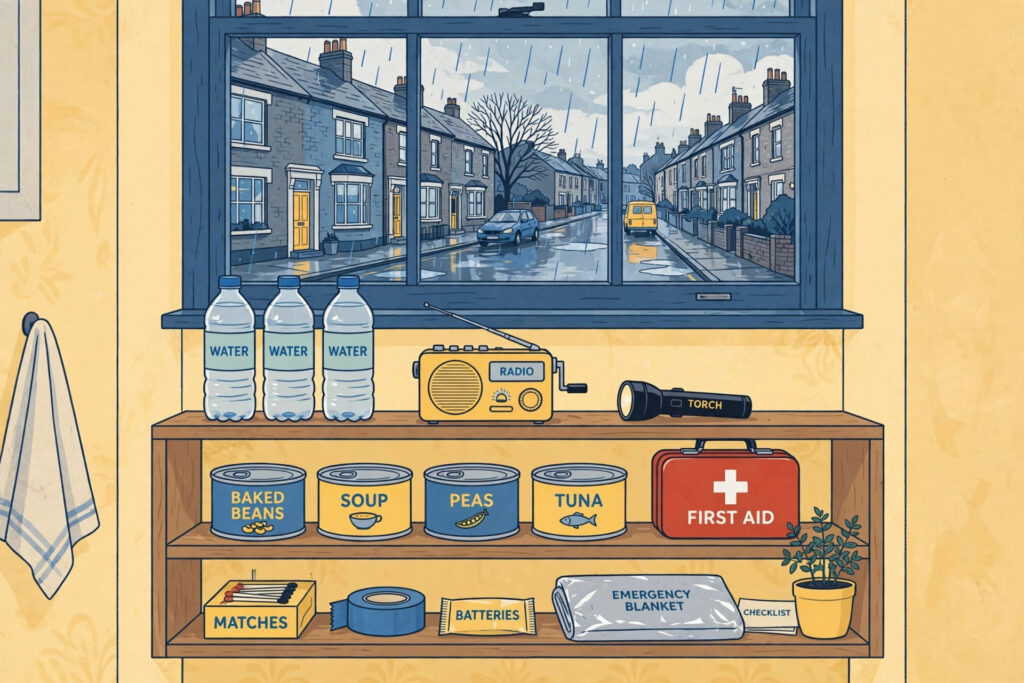
The campaign is a three-year public information effort run by the Cabinet Office, and its checklist is practical: bottled water, long-life and tinned food, a torch with spare batteries, a charged power bank, a wind-up or battery radio, cash, a first aid kit, medication and warm clothing. The government recommends three litres of water per person per day, and says households that can cope alone for 72 hours let emergency services focus on the most urgent cases.
The response has been immediate. Al Jazeera reports that Maplin saw torch sales rise 284 percent, radios 92 percent and power banks 106 percent, while Robert Dyas sold 160 percent more radios and at least seven wind-up radio models sold out. Yet a Cabinet Office survey found only 13 percent of households felt largely or totally prepared, and 84 percent wanted more advice.
Why it matters
The first thing to notice is the language. Defence Secretary Wes Streeting, the public face of the campaign, says the government wants people to be alert but not alarmed, and that is a sentence carrying a lot of weight. It is the language of a government that knows it is telling citizens something unsettling, that the systems they depend on can fail, while insisting that the appropriate response is a torch and some tinned beans rather than panic. Whether that balance holds will decide whether Be Ready is remembered as sensible resilience or as scaremongering, a charge already levelled at Streeting by an audience member on the BBC's Question Time.
The sales figures show the message landed, whatever the argument about tone. A 67 percent jump in bottled water sales in ten days, and the equivalent of 400,000 extra people a day buying tinned meat immediately after the launch, is not a niche response. It is a mainstream one. The retail research firm Worldpanel by Numerator was quoted as saying this was not panic buying, and that distinction matters: people were not emptying shelves, they were buying a modest stockpile and going home. The campaign seems to have activated a latent anxiety rather than creating a new one.
That anxiety has real roots, and the government knows it. Britain's summer of 2026 brought months of heatwaves, drought and fires, a June heatwave that forced the grid to call on France for emergency supply, and a cyberattack in July that knocked a small gas power plant offline for four days. Add hackers hijacking supermarket refrigeration controls in Europe this autumn, and the idea that a household might need to cope alone for three days stops sounding like a fantasy. The campaign is, in effect, the government admitting that the infrastructure is more fragile than citizens assumed.
But there is a serious problem hiding inside the cheerful checklist, and it is affordability. More than 180 experts, academics, farmers and community food leaders signed an open letter warning that 29 percent of Britons cannot afford a three-day food reserve. A campaign that tells every household to stock up, without addressing the nearly one in three households that cannot, risks becoming advice for the comfortable. The same criticism applies to the kit itself: a wind-up radio, a power bank, three litres of water per person per day and three days of food is a meaningful expense for a family already choosing between heating and eating.
The prepper community, long treated as a fringe curiosity, is suddenly mainstream, and the shift is visible in the numbers. Wired reports that Glyn Smith, founder of the UK Survival Network, says the new interest is not lone survivalists but mums, dads, couples and retirees. That is the demographic the campaign is aimed at, and it is also the demographic that retailers are now serving with emergency kits. One supplier, EVAQ8, told the Washington Post its sales had nearly doubled since news of the campaign leaked in August, with its biggest seller a four-person emergency supply kit selling for about 300 dollars. Resilience, it turns out, is also a market.
Britain is not alone in this. The European Commission's Preparedness Union Strategy, published in March 2025, recommends the same 72-hour self-reliance, and Sweden posted 5.2 million copies of its crisis-preparedness brochure in November 2024. The difference is that Sweden has a long tradition of civil preparedness, while Britain is starting from a much lower base: only 13 percent of households felt prepared, and a Bournemouth University survey found 21 percent of people were not aware of the risks at all. The Be Ready campaign is a three-year effort precisely because changing that baseline takes time, and because the government knows a single leaflet will not do it.
What to watch next
Watch the next stages of the three-year campaign, and whether the government pairs advice with help. If affordability measures follow, such as subsidised kits or guidance for low-income households, the campaign will have answered its strongest criticism. If not, the 29 percent who cannot afford a stockpile will remain the story's uncomfortable centre.
Watch too for the winter test. The campaign was launched in autumn, and the first real test will be a cold snap, a storm or a power cut that leaves households to cope alone. How the public responds then, and whether the stocked-up shelves actually get used, will show whether Be Ready changed behaviour or merely changed shopping.
Frequently asked questions
What is the UK Be Ready campaign?
The UK Be Ready campaign is a three-year Cabinet Office effort, launched on 22 October, asking households in England and Wales to be able to cope alone for 72 hours if electricity, water, phone and internet fail.
What should households stock for 72 hours?
The government’s checklist includes bottled water, long-life and tinned food, a torch with spare batteries, a charged power bank, a wind-up or battery radio, cash, a first aid kit, medication and warm clothing.
How much water should each person store?
The government recommends three litres of water per person per day, enough for drinking and basic hygiene during a 72-hour emergency.
Is the Be Ready campaign causing panic buying?
Retail researchers say no. Bottled water sales rose 67 percent in the ten days after launch, but analysts describe it as planned stocking up rather than panic buying, with shoppers buying modest supplies.


