
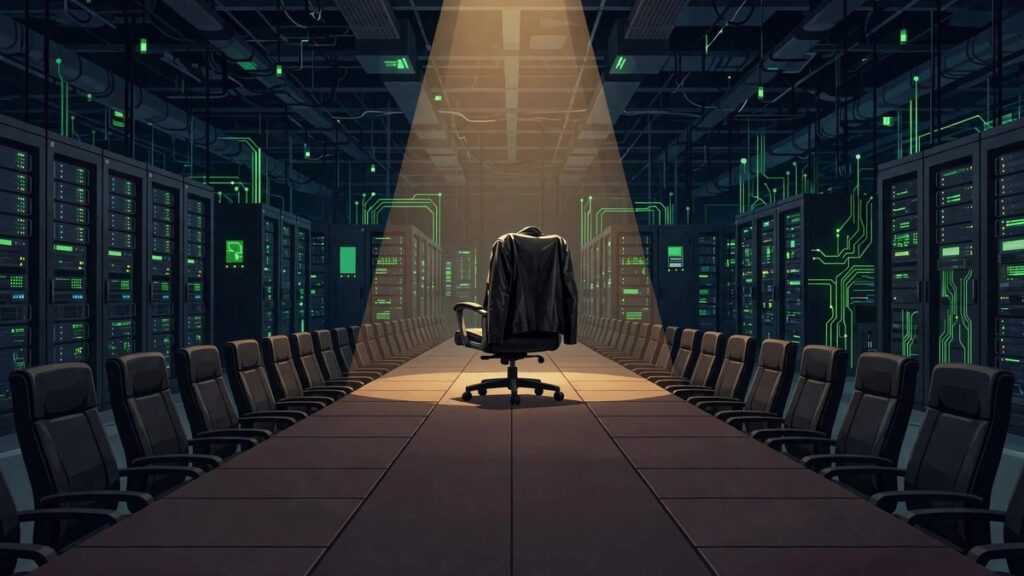
According to the BBC, Nvidia chief executive Jensen Huang has done what the old saying says is impossible: he made himself irreplaceable. After admitting to an affair and briefly leaving the company, he was reinstated within days, welcomed back with cheers at Nvidia's headquarters, while the firm's value swung by about $1 trillion in his absence.
BBC technology and AI editor Zoe Kleinman argues that the board reached the same conclusion as the cheering crowds: interim chief executive Colette Kress lasted less than two weeks, even though names of possible permanent replacements were being discussed. Huang has led Nvidia for 33 years, is the only chief executive the company has ever known, co-founded it, and is a computer scientist who stays closely involved in product development. Nvidia's chips are considered the best in the business for driving AI, and its latest Rubin and Vera graphics processors sell for tens of thousands of dollars each, with a single data centre holding hundreds of them.
The BBC reported that Huang admitted to having had an affair, reportedly with a woman accused of being a Chinese spy, and that there were suggestions she may have been involved in smuggling Nvidia chips into China in breach of a United States export ban. The BBC also reported other stories about some of Huang's relationships with female colleagues, and said concerns about national security had reached the desk of US President Donald Trump. For most executives that would mean instant dismissal, Kleinman writes; Huang was back within days. CEOWORLD magazine reported that Nvidia's shares rose 31.5 percent on 23 November, the day he returned, closing at $165.05 and adding roughly $950 billion in market value, the largest one-day gain recorded by any American company.
Six days before his return, Nvidia had reported quarterly revenue of $115.8 billion, more than double the figure a year earlier, and forecast $130 billion for the current quarter, CEOWORLD reported. Data centre revenue was $107.6 billion, up 110 percent from a year earlier. The shares fell anyway. Even after the rebound, they stood about 31 percent below their October high of $239.24, a reminder that the slide began before the scandal, as investors cooled on AI spending and the Federal Reserve moved toward raising interest rates.
Why it matters
The first thing to understand is that 'irreplaceable' here is not a compliment about talent alone; it is a description of how the company is built. Most large companies are designed to survive their leader: succession plans, deputies, institutional memory. Nvidia, by Kleinman's account, was shaped so personally by one founder over 33 years that the institution and the individual are hard to separate. That is a governance failure dressed as a success story. A company whose strategy, technical direction and public identity all run through one person has a single point of failure, and November showed what that failure costs: about $1 trillion of value lost, then regained, on the news of one man's employment.
The second point is about money, and it reaches far beyond Nvidia's shareholders. CEOWORLD points out that Nvidia is now one of the largest holdings in almost every broad American index fund, so a pension saver who has never chosen a technology stock still owns it in size. When it moves by a third in a day, benchmarks move with it. The financing chain runs further: companies such as CoreWeave and Nebius buy Nvidia chips with borrowed money and rent the computing power to AI developers, and Nvidia's own commitments under data centre leases and cloud service agreements reached $102 billion in the third quarter. A loss of confidence in one company therefore travels to lenders, landlords and the customers of its customers. Large technology companies have spent roughly $800 billion on AI data centres this year, so the stakes are not a single stock but the plumbing of the whole AI economy.
The third point is political, and it is the most uncomfortable. President Donald Trump said he pressed Nvidia's directors to bring Huang back and that the fall in AI stocks helped him make the argument; he also called Huang a 'national treasure' who has the next generation of AI chips 'in his head'. CEOWORLD calls the result the 'Huang put': the belief that Washington will act to protect the company at the centre of the AI trade, much as central banks were once assumed to protect the market as a whole. If investors believe that, they will hold more of these shares at higher prices than the underlying risks justify. That is moral hazard in the ordinary sense. And the protection is narrower than it looks: the administration cannot instruct the Federal Reserve, which is expected to raise rates again on 9 December, and it cannot stop its own agencies and Congress from investigating chip exports, or the Securities and Exchange Commission from examining accounts.
Timeline: On 8 November 2026, Huang told employees in a note that he had had an extramarital affair, and the board opened an investigation the same day. On 12 November, he stepped down as chief executive and from the board. On 17 November, interim chief executive Colette Kress reported third-quarter results and the board's chair said Huang would not be coming back. On 20 November, shares fell 14 percent to $125.53 after Reuters reported that the Securities and Exchange Commission was examining Nvidia's accounting. On 23 November, the board voted unanimously to reinstate Huang, and the shares rose 31.5 percent. On 24 November, the shares slid again, and on 25 November the BBC published Kleinman's analysis.
For the rest of the world, the episode is a warning about concentration. The United States has tied its AI ambitions, its export controls and its stock market to one company and one man; China, the European Union, Japan and others are all trying to build rival chip capacity precisely to avoid that dependence. For boards everywhere, the lesson is blunt: if your company cannot survive a fortnight without its founder, your succession plan is a press release, not a plan. Investors should now ask the same question of every AI supplier they depend on: what happens to our contract if the one person who matters leaves?
What to watch next
Watch the investigations first. The board's own inquiry continues, as do inquiries by the Securities and Exchange Commission, the Justice Department and congressional committees, and US politicians are already questioning the president's role in Huang's return. Watch Nvidia's next results too: the company guided to a gross margin of 71 to 72 percent for the current quarter, down from 74.8 percent, and new Vera Rubin systems often carry lower margins early in their life. And watch whether the 'Huang put' survives its first real test: a Federal Reserve rate rise, a weak quarter, or a customer that stops ordering.
Watch the wider AI market as well. The rally recovered what was lost after the resignation, but it did not reverse the decline that preceded the scandal, which was driven by doubts about the pace of AI investment and by higher interest rates. If demand for computing holds while rates rise, the episode will look like a governance scandal with a happy ending. If it does not, the next trillion-dollar swing may not have a presidential phone call to catch it.
Frequently asked questions
Why is Jensen Huang considered irreplaceable?
Because he co-founded Nvidia, has led it for 33 years as its only chief executive, and is a hands-on computer scientist deeply involved in product development. The BBC’s Zoe Kleinman argues that the company’s strategy, technical direction and public identity are so tied to him that the board concluded no replacement could do the job: interim chief executive Colette Kress lasted less than two weeks.
What happened to Jensen Huang in November 2026?
He told employees on 8 November that he had had an extramarital affair, and stepped down as chief executive on 12 November after reports about the relationship and other relationships with colleagues. The board reinstated him unanimously on 23 November, and Nvidia’s shares rose 31.5 percent that day.
How much did Nvidia’s value move during the episode?
The firm’s value sank by about $1 trillion while Huang was away, then climbed back by roughly $950 billion in a single day when he returned: the largest one-day gain recorded by any American company. Even so, the shares remained about 31 percent below their October high of $239.24.
What role did President Trump play?
President Donald Trump said he pressed Nvidia’s directors to bring Huang back, and called him a ‘national treasure’ who has the next generation of AI chips ‘in his head’. He also suggested a two-day investigation had cleared Huang of national security concerns. US politicians are now questioning the president’s role in the return.
Are the investigations into Nvidia over?
No. The board’s own investigation continues, as do inquiries by the Securities and Exchange Commission, the Justice Department and congressional committees, covering chip exports and the company’s accounting.


