
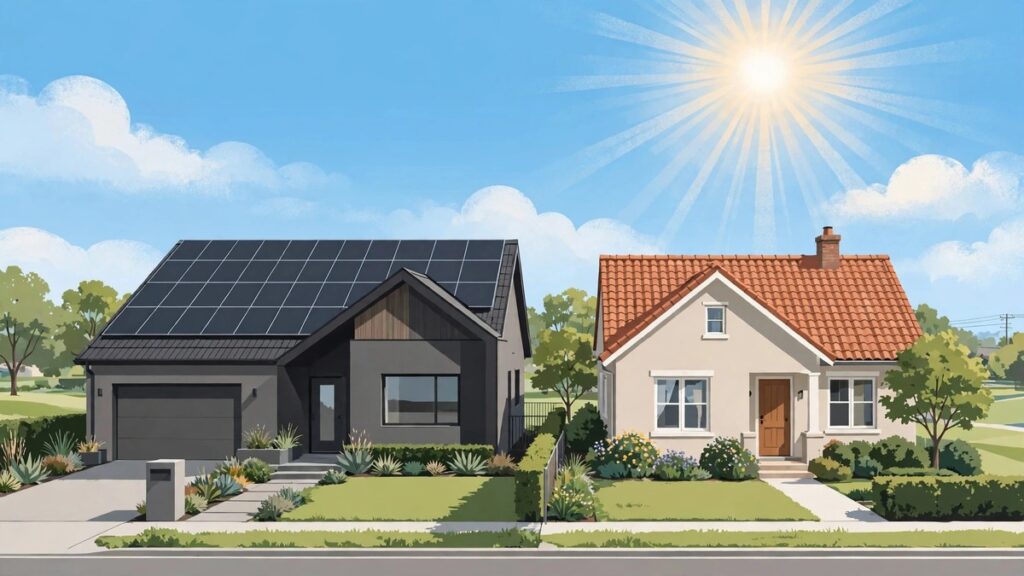
According to the BBC, solar roof tiles were touted as an attractive alternative to solar panels, yet they have never taken off. Tesla, the most visible maker of the technology, stopped offering its Solar Roof in August 2026 after years of weak sales, leaving a small group of specialist firms to carry the idea forward.
Solar tiles hide solar cells inside shingles that look like ordinary roofing, and the BBC reports that they were long touted as an attractive alternative to panels. Engadget reports that Tesla's version was designed to look like regular shingles while delivering 98 percent of a normal panel's efficiency, by reflecting light so the tiles appeared ordinary from street level.
The numbers explain the failure. Engadget reports that Tesla installed only about 3,000 Solar Roofs in the United States, against a target of 1,000 installations a week, peaking at 20 to 40 a week in 2022. In 2021, Tesla chief executive Elon Musk admitted the company had made 'significant mistakes' that led to overspending and delays, and in 2023 Tesla settled a customer class action for $6 million over sudden price rises.
Smaller firms are still trying. The BBC reports that Freesuns, a small Swiss company, has seen sales grow 20 to 30 percent since it was founded in 2019 and is considering expanding to the United States. Its chief executive, Deborah Learoyd, says much of the cost comes from the fact that every roof is different, so each installation has to be engineered and installed differently.
Why it matters
The core problem is a manufacturing trap that has nothing to do with the quality of the idea. Ordinary solar panels became cheap because the world makes billions of standardised cells and assembles them into standard panels, and every cost falls as volume rises. Solar tiles were specific to each maker's system, so the tooling only got cheap with volume that the price itself prevented. Tesla's tiles cost so much that few people bought them, and because few people bought them, they stayed expensive. That loop is what killed the product, not a flaw in the physics.
The second problem is the trades. A solar roof is not one job but three: a roofer, a solar installer and an electrician have to work together, and building regulations are more complex than for panels on a rack. One installer told the BBC that selling a solar roof takes so long he could have sold ten ordinary roofing jobs in the same time, and repairs are harder too, because there is no room under a shingle for the electronics that let a technician map exactly which panel is underperforming. A product that is slow to sell and hard to fix will always lose to a product that is neither.
None of this means the idea is dead, and the surviving firms show why. For a homeowner in a historic building, or anyone who simply dislikes the look of panels, a tile that generates power without visibly changing the facade solves a real problem that panels cannot. GAF Energy's Timberline Solar and CertainTeed's Apollo II shingles are still sold in the United States, and Freesuns' growth suggests a small, premium market can survive without Tesla. The future of solar roof tiles is probably not a mass market but a niche one, sold on appearance and heritage rules rather than on price per watt.
The lesson for the wider energy transition is worth stating plainly. Tesla's Solar Roof was unveiled with a promise that it would cost less than a regular roof plus panels, and it ended with customers reporting quotes that had doubled within a year. Grand launches do not survive contact with installation reality, and the companies that last in this market are the ones that price the whole job, including the roofer's time and the repair call five years later, before they promise anything.
What to watch next
Watch whether Freesuns or another small maker manages the jump to the United States, and whether GAF or CertainTeed can grow beyond the premium niche. If any of them reaches real volume, the cost loop that trapped Tesla could finally run in reverse.
Watch the price of ordinary panels too. Every year panels get cheaper and better looking, and every improvement narrows the gap that tiles were supposed to fill. If panels keep falling in price, tiles will need their looks to carry the whole argument.
Frequently asked questions
Why are more roofs not made of solar tiles?
They cost more than ordinary panels, every roof needs bespoke engineering and installation, repairs are harder, and Tesla, the biggest maker, stopped selling them in August 2026 after weak sales.
What happened to Tesla’s Solar Roof?
Tesla stopped offering it in August 2026 after installing only about 3,000 US systems against a target of 1,000 a week. Its solar roof page now redirects to conventional panels.
Are solar roof tiles still available?
Yes, from smaller makers. GAF Energy’s Timberline Solar and CertainTeed’s Apollo II are sold in the US, and Swiss firm Freesuns is considering expanding there.
Are solar tiles less efficient than panels?
Tesla’s tiles were designed to deliver 98 percent of a normal panel’s efficiency, so the problem was cost and installation, not how much power the tiles produced.


