
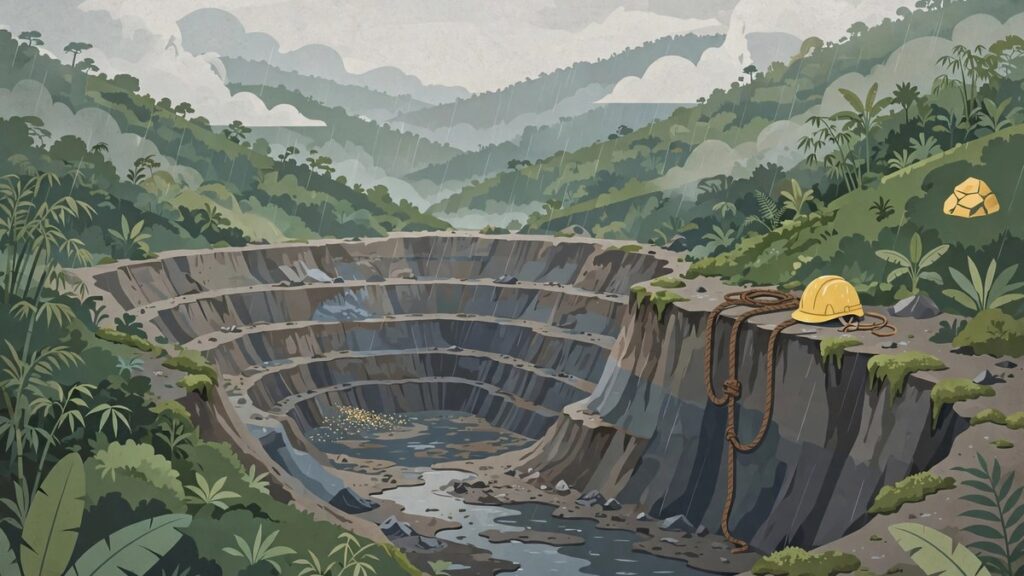
According to the BBC, thirteen people have died and thirteen more are missing after an illegal gold mine flooded in Bogor, in Indonesia's West Java province. Torrential rain caused a nearby river to overflow on Monday night, flooding two shafts about 100 metres deep where at least 26 miners were digging.
Reuters reported that heavy rain forced rescuers to halt the search temporarily, with streams of water flowing back into the mine, and that 26 workers had entered the mine on Monday when the flooding trapped them 100 metres underground. Eleven miners escaped safely before the water flooded the shafts, and around 325 rescuers were involved in the search, using pumps to drain water and ropes to reach the depths of the dark, narrow and slippery shafts.
Why it matters
The disaster was not reported for 16 hours, and that delay tells its own story. Police only received reports about the trapped miners on Tuesday afternoon, because the miners were working illegally and local people initially tried pumping the water out themselves. When a workplace is illegal, nobody calls the authorities first, and in a flooding mine 16 hours is the difference between a rescue and a recovery. The illegal gold mine in Bogor is not an exception to how informal mining works in Indonesia; it is how informal mining works, and the delay is part of the danger.
The economics behind the disaster are global. Small-scale gold mining is banned in Indonesia but remains widespread in rural parts of the mineral-rich archipelago, and in early 2026 gold prices reached an all-time high, spurring a gold rush that prompted mine operators across the country to expand. The flooded mine sits in the Pongkor area of Nanggung district, where the state-owned miner Antam holds the business permit and runs gold mining operations. Antam has said the mine was not theirs and was operating without their authorisation. That is the pattern of the illegal gold hunt: high prices draw people into dangerous pits on land someone else holds the rights to, and when something goes wrong, nobody owns the risk.
The human details make the scale of the loss concrete. The 13 victims identified by West Java police included men born between 1976 and 2006, among them an 18-year-old whose mother, Yuyu, 50, told reporters at a missing person post that her son Haikal had told her he planned to work there. Nineteen people were believed to have been in one tunnel and seven in another when the floodwaters poured in late on Monday. These are not professional miners with safety equipment and insurance; they are local people, known as gurandil, digging by hand in pits 100 to 150 metres deep, in darkness, on slippery ground, for gold that may or may not be there.
Timeline: on Monday afternoon 23 November 2026, at least 26 miners entered an excavation shaft near the Ciseureuh River in Bantar Karet village, Nanggung district, and heavy rain caused the river to overflow into the mine. The disaster went unreported for 16 hours, and the Bogor disaster agency received a report only on Tuesday afternoon 24 November. On Wednesday 25 November, 26 families reported missing relatives at a post in the Antam Pongkor complex, and that evening West Java police said 13 bodies had been found. On Thursday 26 November authorities confirmed 13 dead and 13 missing, and by Friday 27 November all 13 bodies had been identified and handed to their families.
What to watch next
Watch the search for the 13 missing miners. Heavy rain has already forced one halt to the rescue, and the shafts are continually being flooded from below, so the operation depends on the weather as much as on the rescuers. The longer the search takes, the lower the chance of finding anyone alive.
Watch what Indonesia does about informal mining after this disaster. The Pongkor area has seen a series of deadly incidents involving unauthorised mining, including tunnel collapses, landslides and exposure to toxic gases. Each disaster brings promises of enforcement, and each time the gold price gives people a reason to go back underground.
Frequently asked questions
How many people died in the Indonesia gold mine disaster?
Thirteen people died and thirteen more are missing after an illegal gold mine flooded in Bogor, West Java. All 13 bodies were identified and handed to their families by Friday 27 November.
What caused the mine to flood?
Torrential rain on Monday 23 November caused a nearby river to overflow and flood two mine shafts about 100 metres deep, trapping at least 26 miners who were digging in the open-pit mine.
Why was the disaster reported so late?
Police only received reports 16 hours after the flooding, because the miners were working illegally and local miners and residents initially tried pumping the water out themselves.
Is the mine part of Antam’s operations?
No. State-owned miner Antam, which holds the business permit for the area and runs gold mining operations in Pongkor, said the mine was unauthorised and was not part of its operations.


