
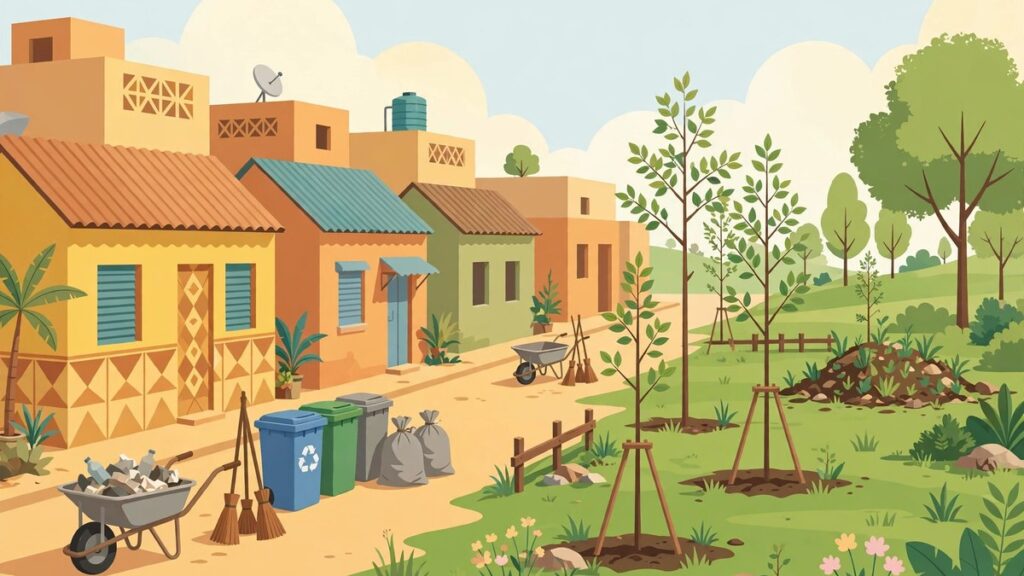
According to the BBC, Guinea has ordered residents to carry out a mass Conakry clean-up by 31 December, months after a rubbish landfill collapsed and killed dozens of people. Prime Minister Amadou Oury Bah announced the deadline on Wednesday, saying the capital must be completely clean by the end of December.
The Voice News Magazine reported that heavy overnight rain caused a landslide at the Dar-es-Salaam landfill on 23 August, sweeping away makeshift dwellings nearby and killing 36 people, while the BBC put the death toll at 31. The site was permanently closed after the disaster, and rubbish has since piled up outside homes and beneath bridges across Conakry, where the city generates about 3,000 tonnes of waste every day.
Why it matters
The order to clean up the capital is, in effect, an admission that the state cannot do it alone. Prime Minister Bah told local authorities to take a bigger part in organising waste collection, saying the state will do its part but the municipalities must also organise themselves, and that waste collection could provide jobs for young people. That is a government asking its citizens to fix a problem its own systems created, and it will only work if the state actually delivers the trucks, the sorting centres and the new disposal site at Baretode, outside the capital, that officials say have been arranged. A deadline without equipment is just a speech, and Conakry has heard plenty of speeches about rubbish.
The deeper problem is that Conakry's waste system collapsed with the dump. When the Dar-es-Salaam site closed permanently, the city lost its only disposal route, and three months of waste had nowhere to go. Sanitation Minister Aboubacar Camara said a significant part of the city's 3,000 tonnes of daily waste ends up on the streets, due to a lack of civic spirit but also because the garbage collection system needs to be improved. That second half of his sentence is the honest part: this is not mainly a problem of people littering, it is a problem of a city of millions with no working system to take its rubbish away. The Conakry clean-up will clear the streets for a month, but unless the new system works, the piles will be back by February.
There is also a longer and darker history here. The Dar-es-Salaam landfill was not just a dump, it was a place where people lived, in makeshift dwellings beside a mountain of rubbish, and the government had told people living near it to leave, but many stayed because they had nowhere else to go. Ten people were killed at the same site in 2017, nine years before this year's collapse, which means the danger was known and the site stayed open anyway. The government's plan to turn the closed site into an urban park is a good idea, and it is also a way of making sure nobody ever lives on a rubbish mountain again. Whether that promise holds will be measured in what gets built there, not what gets announced.
Timeline: in 2017, ten people were killed at the Dar-es-Salaam landfill in Conakry. On 23 August 2026, heavy rain caused a landslide at the site, with rubbish collapsing onto homes below and killing 31 people according to the BBC, with other reports putting the toll at 36. The site was closed permanently, and rubbish began piling up across the capital. On Wednesday 25 November 2026, Prime Minister Amadou Oury Bah announced a deadline of 31 December for residents and local authorities to clear the city and its suburbs, relaying a directive from President Mamady Doumbouya.
What to watch next
Watch whether the 31 December deadline is met, and who does the work. If municipalities organise collection and the state delivers the promised equipment and funding, Conakry could look very different by January. If the deadline passes with the rubbish still there, it will show the limits of ordering citizens to solve a problem the state has not solved itself.
Watch the money. The first phase of the national clean-up policy from this year to 2030 is estimated at 5.4 billion Guinean francs, about 610,000 dollars, and officials say a national sanitation fund will guarantee financing. That is a small sum for a national waste system, and the real test is whether the fund actually pays for trucks, workers and the new Baretode site.
Frequently asked questions
What is the Conakry clean-up deadline?
Guinea’s government has given Conakry and its suburbs until 31 December 2026 to clear the rubbish that has built up since the city’s main dump was shut. Prime Minister Amadou Oury Bah said the capital must be completely clean by the end of December.
Why is there so much rubbish in Conakry?
The city’s main dump at Dar-es-Salaam collapsed in August 2026, killing 31 people, and was then closed permanently. With no disposal route, rubbish has piled up in the streets, and the city generates about 3,000 tonnes of waste every day.
What will happen to the closed dump site?
The government plans to transform the closed Dar-es-Salaam waste site into an urban park, and to move waste to a new disposal site at Baretode, outside the capital.
Has this happened before in Conakry?
Yes. Ten people were killed at the same Dar-es-Salaam site in 2017, and the August 2026 collapse was the second deadly incident there.


