
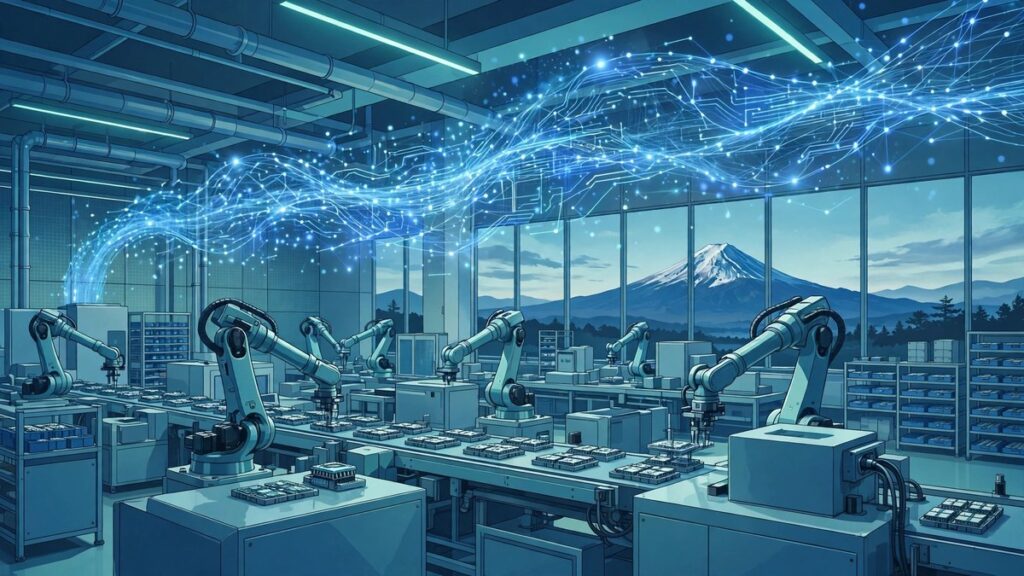
According to TechCrunch, Japan-based Sakana AI has begun work on Sawara, its own foundation model, aiming to release a smaller version in early 2027 and a larger one later. Chief executive David Ha says the project serves Japanese manufacturing and industry first, while also giving Japan domestic AI for defence and cybersecurity work.
The project follows two earlier products from the Tokyo startup. About five months ago Sakana launched Fugu, an orchestration system that combines models from United States labs, including OpenAI, into agents built for specific jobs. It also built Namazu, a Japanese-focused model that fine-tunes open-weight systems from Meta and DeepSeek for Japanese language, culture and business tasks such as translation and political questions.
Ha told TechCrunch that foreign open-weight models cannot simply be used as they are by Japanese enterprises, because they carry the biases of their creators and may refuse questions about Japan or its politics. AIFOD noted the same concern in its account of the announcement, while TechEchelon reported that the smaller Sawara model is designed above all for on-premises use, which Japanese defence and cybersecurity customers require.
Why it matters
The deeper point is about control, not capability. A country that runs its factories, power grids and defence systems on models built elsewhere is renting its judgement. If a foreign provider changes its rules, raises its prices or cuts off access during a crisis, Japan would have no fallback of its own. Sawara is therefore best understood as insurance: a domestic option that exists even if it is not used for everything, every day.
The industrial angle matters as much as the security one, and it explains why Sakana is starting here rather than chasing chatbots. Japan's economy still runs on manufacturing, from car plants to precision robotics, and those environments need AI that understands factory floors, supply chains and physical processes. A model tuned for Japanese industry could be worth far more to the country's economy than another general-purpose assistant, because it plugs directly into the work Japan already does best.
Government work has already shaped what Sawara must be able to do, and those requirements are stricter than anything a commercial customer usually asks for. Defence and cybersecurity users need to audit training data, customise the model for their own purposes and run it entirely on their own premises, cut off from outside networks. Building to that standard from the start makes Sawara harder to build, but it also makes it credible for the sensitive jobs where foreign models are ruled out.
Timeline: in July 2026 Sakana signed a research contract with Japan's Ministry of Defense to explore AI that integrates and analyses information from multiple sources, and it has also worked with the Ministry of Internal Affairs and Communications on disinformation detection. In October 2026 the company revealed plans to develop its own foundation model. Work on Sawara began in November 2026, with a smaller model aimed for release in early 2027 and a larger version to follow. The project comes roughly five months after Sakana launched Fugu, its AI orchestration system.
Ha is unusually honest about the limits, and that honesty makes the plan more believable. He acknowledged that a domestic foundation model alone will not end Japan's reliance on foreign AI technology, and he said Japan will keep using American systems alongside its own. His point is narrower: for national defence and the most sensitive work, Japan wants systems it controls, even while it keeps buying from companies such as Palantir, Snowflake and Datadog for everything else.
The wider pattern is that sovereign AI is becoming a normal national project, not an exception. Countries across Europe, the Middle East and Asia are all funding domestic models for the same mix of reasons: industrial competitiveness, data control and security. Japan's version is distinctive because it starts from manufacturing strength rather than from a consumer internet market, and because Sakana, a startup rather than a state lab, is the vehicle. If Sawara works, other mid-sized economies will study the model closely.
What to watch next
Watch the early 2027 release of the smaller model. Its real test will not be a demo but whether Japanese manufacturers and government agencies actually deploy it on their own systems, and whether its Japanese-language and industrial performance beats the fine-tuned foreign models Sakana already offers.
Watch the government pipeline too. Further defence or disinformation contracts would confirm that Sawara is becoming part of Japan's security infrastructure rather than a research project, and any firm IPO timetable would signal how fast Sakana expects to scale.
Frequently asked questions
What is Sakana AI’s Sawara model?
The Sawara foundation model is the system Japan-based Sakana AI is building for Japanese industry, manufacturing and security work. A smaller version is planned for early 2027, with a larger version to follow.
Why does Japan need its own AI model?
Chief executive David Ha argues that foreign models carry their creators’ biases, may refuse questions about Japan or its politics, and cannot always be run on-premises, which defence and cybersecurity work requires. A domestic model gives Japan a fallback if foreign access is limited.
When will Sawara be released?
Work began in November 2026. Sakana aims to train and release a smaller-scale model in early 2027, followed by a larger version. No exact dates or technical specifications have been disclosed.
Will Sakana stop using foreign AI models?
No. Ha said Japan will continue to use American systems, and Sawara is meant to sit alongside them, not replace them. Its main role is for sensitive applications where Japan wants domestic control.


