
According to the BBC, Vithabai Narayangaonkar, one of the greatest stars of Maharashtra's folk theatre, has inspired Eetha, a Bollywood musical starring Shraddha Kapoor that is due in cinemas on 4 December 2026. Vithabai, who died in 2002, earned the title Tamasha Samradnyi, the empress of Tamasha, the state's traditional travelling folk theatre.
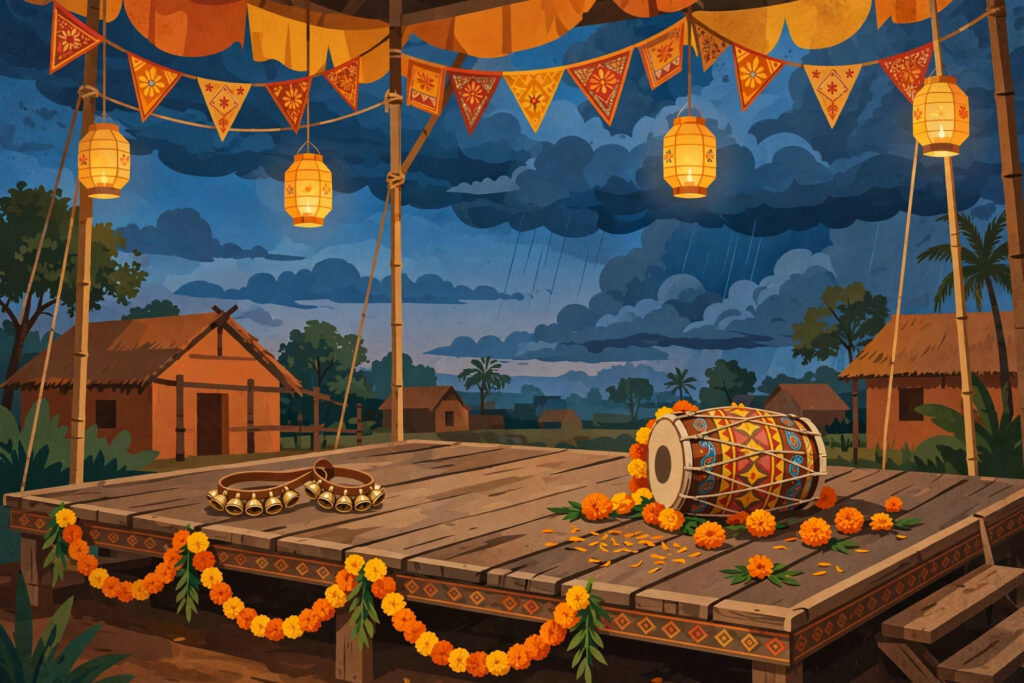
The story behind the film's title comes from a performance in Mumbai during Diwali in 1971. Rain threatened to cancel the show, but spectators insisted on buying tickets anyway, saying the money would be their Bhau Beej gift to Vithabai if the performance could not go ahead. The show was indeed called off, and, as the BBC reports, no one asked for their money back.
Vithabai was born during a Tamasha performance in 1935, and the stage never really let her go. In the 1960s she went into labour mid-performance in Shikhar Shingnapur, stepped behind the stage into a makeshift tent while her troupe carried on, and returned cradling her newborn son. She performed for Indian soldiers during the 1962 war with China, and turned down film offers from leading directors because leaving theatre would have abandoned the troupe that supported some 50 families.
Why it matters
The 1971 Diwali story is the kind of anecdote that sounds too good to be true, which is why it is worth pausing on what it actually tells us. An audience that has already paid for a show, learns it may be rained off, and insists on paying anyway is not behaving like customers. They are behaving like patrons, or like family. The Bhau Beej framing matters: a festival celebrating the bond between brothers and sisters, repurposed as a gift to a performer they saw as their own. That is the relationship Vithabai built with her audiences over decades, and it is the relationship Bollywood is now trying to bottle in Eetha.
Tamasha itself deserves explaining, because the film's success or failure will turn on whether audiences understand what it is. It is Maharashtra's traditional travelling folk theatre, a mix of music, dance, storytelling and comedy performed in villages and towns, with Lavani dance at its heart. Its stars were often women from oppressed castes who faced discrimination off stage even as crowds adored them on it. Vithabai, as historian Shailaja Paik has documented, once rebuked men in the audience for lewd gestures, reminding them she danced to earn a living, not to please them. The art form's history is inseparable from questions of caste, gender and who gets to be respected for their work.
That history is also why Vithabai's refusal of film fame matters. Leading filmmakers including Raj Kapoor offered her roles, and she said no, because film would have benefited her alone while her troupe supported around 50 families. It is a decision that looks almost incomprehensible in an age of personal branding, and it is the moral centre of her story. She chose the collective over the individual, the travelling troupe over the studio, and she paid for it: her husband Maruti Sawant mismanaged the troupe's finances and took loans in her name, and she left him in 1982. The glamour of the stage, in her life, sat very close to financial precariousness.
Shraddha Kapoor's preparation for the role shows how seriously the filmmakers are taking the physical demands of Lavani. Director Laxman Utekar says she rehearsed each song for 25 days, eight hours a day, dancing in ghungroos weighing four kilograms on each leg, despite swollen feet and a muscle tear, and gained 10 to 12 kilograms for the film's second half. Kapoor had never performed Lavani before. Whether that effort reads on screen as authentic or as admirable imitation is the question every biographical performance faces, and it will be judged most harshly by the people who know the form best.
There is already a controversy, and it is instructive. Utekar says Eetha is not a biopic, and he has renamed the protagonist Vithabai Bhau Gavkar instead of using her full name, Vithabai Bhau Mang Narayangaonkar. That choice has drawn criticism, and it raises a real question about what a film owes a real person: if you take her life, her troupe, her famous 1971 show and her songs, but change her name and disclaim the biopic label, have you honoured her or have you borrowed her? The film currently tops IMDb's list of most anticipated Indian movies, so the debate will play out in front of a very large audience.
What makes this story travel beyond Maharashtra is the universal shape underneath it. Every culture has a folk form that the mainstream forgot and a performer who kept it alive at personal cost. Vithabai's life is about that keeper, and about an audience that once paid for a show that never happened because the performer mattered more than the performance. If Eetha works, it will do more than entertain: it will put Tamasha and Lavani in front of viewers who have never heard of them, and it may send some of them looking for the real thing.
What to watch next
Watch the release on 4 December, and the first reviews from Maharashtra in particular. Critics who know Tamasha will be the real test of whether the film respects its subject, and the box office will show whether a folk-theatre story can compete with the usual Bollywood spectacles in the Christmas season.
Watch too whether the film revives interest in Tamasha itself. A hit could bring funding, students and audiences to a form that has survived on devotion and very little money. A flop, or a film seen as disrespectful to Vithabai's memory, could do the opposite, and the argument over her renamed character is unlikely to go away.
Frequently asked questions
Who was Vithabai Narayangaonkar?
Vithabai Narayangaonkar (1935-2002) was one of the greatest stars of Maharashtra’s folk theatre, a singer, dancer and troupe leader known as Tamasha Samradnyi, the empress of Tamasha.
What is Tamasha?
Tamasha is Maharashtra’s traditional travelling folk theatre, combining music, dance, comedy and storytelling, with Lavani dance at its heart. It is performed by travelling troupes in villages and towns across the state.
When is Eetha released?
Tamasha queen Eetha, the Bollywood musical inspired by Vithabai’s life and starring Shraddha Kapoor, is due in cinemas on 4 December 2026.
Is Eetha a true biopic?
Director Laxman Utekar says it is not a biopic, and he has renamed the protagonist Vithabai Bhau Gavkar. The film is based on Yogiraj Bagul’s Marathi book about Vithabai’s life, but the renaming has drawn criticism.


