
According to Forbes, the US Department of Justice's inspector general has again placed the Federal Bureau of Prisons at the top of its annual list of management challenges for 2026, despite billions of dollars in new funding. The report says staffing, crumbling infrastructure, healthcare, inmate deaths and contraband remain unresolved.
The Bureau of Prisons problems include familiar failures across staffing, deteriorating infrastructure, healthcare, inmate deaths, contraband, employee misconduct, security systems and implementation of the First Step Act. Congress provided the bureau with 5 billion dollars in supplemental funding in 2025, including 3 billion for personnel and 2 billion for maintenance and repairs, yet the inspector general reported that the bureau's overall number of employees had declined as of August 2026.
The DOJ OIG report acknowledges progress but concludes that federal prison management remains a significant systemic concern, and the LISA newsletter, which covers federal prisons for inmates and their families, called the findings a reminder that the agency's systemic problems remain as stubborn as ever. A separate Government Accountability Office report found that in 2024, 45 percent of the bureau's 244 in-custody deaths from natural or unknown causes involved identified healthcare shortcomings.
Why it matters
The most striking fact in the report is not the list of problems but the persistence of the list. The Bureau of Prisons has appeared in the inspector general's annual management challenges report for more than a decade, with many of the same deficiencies appearing year after year. Directors change, Congress investigates, money is appropriated and reforms are promised, and the next report describes the same institution in the same terms. Forbes noted that each director, with an average tenure of less than two years, has brought different priorities, but the agency's fundamental challenges have remained. That churn at the top is itself part of the problem: no leader stays long enough to see a multi-year fix through.
Staffing is the foundation of the problem, and the numbers show why money alone has not fixed it. Congress provided 3 billion dollars for personnel expenses in 2025, yet the bureau's overall headcount declined as of August 2026. Recruitment and retention remain difficult, particularly at institutions in rural areas where competition for qualified employees is challenging. The DOJ OIG previously criticised the bureau for lacking a reliable method to determine appropriate staffing levels, which means the agency has been trying to fill posts without a clear picture of how many posts it actually needs. Understaffing then cascades: fewer officers means more lockdowns, fewer programmes, worse healthcare and more contraband.
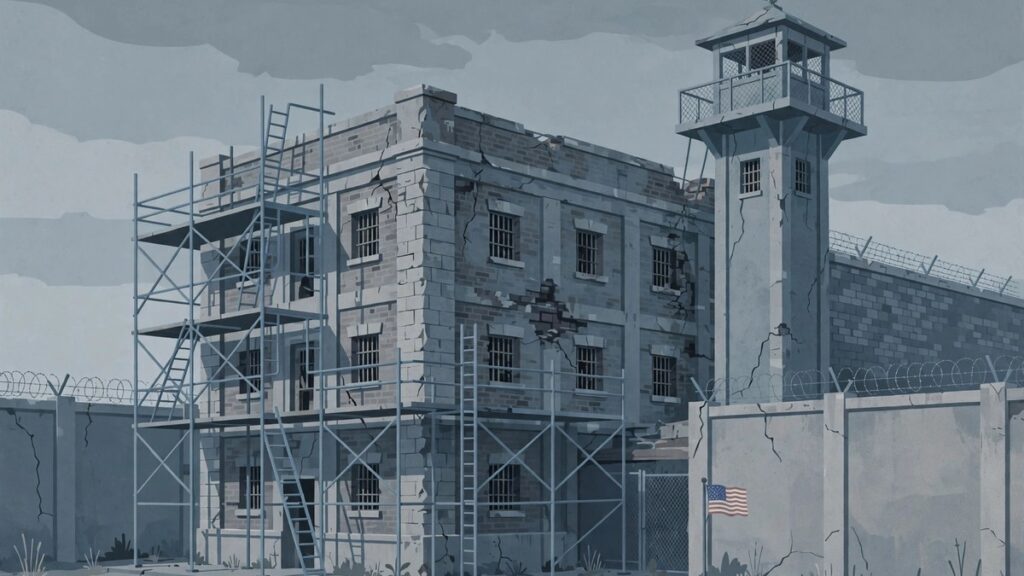
The infrastructure problem is a slower crisis with the same shape. Many federal prisons are decades old and need extensive repairs to roofs, electrical systems, plumbing, heating and cooling, and the bureau has struggled for years to obtain enough funding to clear a substantial backlog of deferred maintenance. The 2 billion dollars provided for maintenance and repairs in 2025 is real money, but the DOJ OIG noted the bureau has estimated that substantial additional funding will be needed to fully remedy the dire condition of its infrastructure system-wide. Buildings do not get fixed on a single appropriation cycle, and a roof that leaked for a decade cannot be repaired by a budget line alone.
The First Step Act findings show a different kind of failure: money spent, but not as Congress intended. A May 2026 inspector general report found significant deficiencies in the bureau's use of 1.23 billion dollars in First Step Act funds during fiscal years 2022 through 2024. Without clear authority, the bureau used over 250 million dollars to provide free phone calls to all inmates rather than limiting the benefit to programme participants, and transferred nearly 120 million dollars to the Department of Labor for a vocational training programme it could not show was advancing the Act's purposes. At many institutions, hundreds of inmates waited years to complete programmes because of staffing shortages, space limits and lockdowns, and about one-quarter of inmates who received early release under the Act had not completed a single programme.
Timeline: the First Step Act was passed in 2018, requiring expanded programmes to prepare inmates for release. During fiscal years 2022 through 2024 the bureau spent 1.23 billion dollars in Act funds with the deficiencies the inspector general documented in May 2026. In July 2025 new legislation provided 5 billion dollars in supplemental funding through September 2029. The inspector general's annual challenges report for 2026, released in November, again placed the bureau first among six department challenges, and a separate Government Accountability Office report the same month examined the bureau's in-custody deaths in 2024.
Healthcare is where the staffing and management failures become matters of life and death. The inspector general's unannounced inspections in 2026 at FDC SeaTac and USP Canaan found that staff shortages had negative impacts on inmate healthcare, including delays seeing medical providers and backlogs for laboratory tests. The report highlighted the case of former inmate Frederick Bardell, whose preventable death from colon cancer was made worse by the bureau's treatment of him as he was dying. The LISA newsletter noted the inspector general's dry observation that the management challenge is not limited to correcting specific shortcomings in individual cases, and that recurring deficiencies across institutions can indicate weaknesses in policy, staffing, supervision, information systems, training or accountability.
The deeper question the report raises is whether the Bureau of Prisons can correct itself at all. Forbes quoted the inspector general's finding that one particularly troubling aspect has been the bureau's inability to consistently correct problems after identifying them: the agency conducts internal reviews, responds to outside inspections and establishes corrective action plans, yet similar deficiencies continue to appear at different institutions. Identifying a problem is only the first step, and the more difficult task is ensuring corrective actions are implemented throughout the agency and that improvements last. Until that changes, each year's report will read like the last one, and the billions will buy activity without buying results.
What to watch next
Watch how the bureau spends the 5 billion dollars in supplemental funding, which runs through September 2029, and whether the inspector general's continued unannounced inspections show staffing numbers recovering. The funding is the test: if headcount keeps falling despite 3 billion dollars for hiring, the problem is not money.
Watch also for congressional action. The Federal Prison Oversight Act gives the inspector general a mandate to keep inspecting, and the persistence of the same findings year after year is the kind of record that eventually produces hearings, leadership changes or new legislation.
Frequently asked questions
What did the inspector general find about the Bureau of Prisons?
The DOJ inspector general’s 2026 report again placed the Bureau of Prisons first among six top management challenges, citing staffing shortages, deteriorating infrastructure, healthcare failures, inmate deaths, contraband, employee misconduct and weak implementation of the First Step Act.
How much funding did the Bureau of Prisons receive?
Congress provided 5 billion dollars in supplemental funding in 2025, including 3 billion for personnel and 2 billion for maintenance and repairs, running through September 2029. Despite that, the bureau’s headcount declined as of August 2026.
What went wrong with First Step Act funding?
A May 2026 inspector general report found the bureau misused 1.23 billion dollars in First Step Act funds in fiscal years 2022 to 2024, including over 250 million dollars on free phone calls for all inmates and nearly 120 million transferred to the Labor Department without proper oversight.
Who runs the Bureau of Prisons?
The director is William K. Marshall III. Directors have averaged less than two years in the job, and Deputy Director Josh Smith left after about a year, which the report cites as part of the leadership instability behind the persistent problems.


