
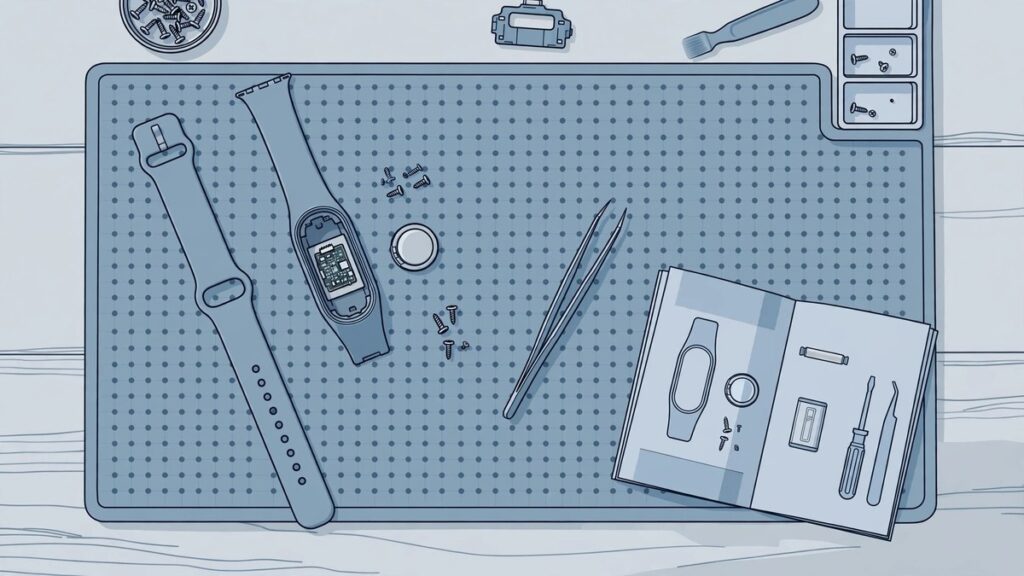
Google's Fitbit Edge is the first Fitbit with a user-replaceable battery, but swapping it is a delicate do-it-yourself job that Google will not do for you. The tracker went on sale on 27 October 2026 at $179.99, and Google partnered with iFixit to publish a free step-by-step repair manual.
According to Engadget, the job needs a fresh battery, specialised tools and replacement screws, because iFixit says the screws can only be used once. The case must be prised open, an O-ring can fall out and must be refitted to keep water resistance, and the work is done with tweezers around tiny circuits. Google offers no paid battery replacement service.
Why it matters
The honest way to read this story is that replaceable does not mean easy, and Google knows it. Engadget's account is full of warnings that sound less like a repair guide and more like a dare: the screws and connectors are tiny even by electronics standards, a slip with tweezers can break a circuit, and static shock can kill the device, so iFixit recommends a grounding mat and avoiding clothes like fleece that build up static. That is a lot of equipment and care for a device that costs $179.99, and it raises a fair question about who this feature is really for. The answer is probably not the average owner, but the small group of repair-minded users and the regulators watching whether companies mean what they say about repairability.
There is a real idea underneath the awkwardness, though. The dirty secret of fitness trackers is that the electronics can last for years while the battery slowly dies, turning a working device into waste. Engadget notes that in theory, as long as Google keeps supporting the app and compatible batteries stay in warehouses, an Edge could last indefinitely. The battery is rated for up to seven days on a charge, and five minutes on the charger buys a full day, so the hardware is built for the long term. A replaceable battery is the difference between a tracker that is retired because its battery faded and one that keeps going, and that difference matters more with every year of electronic waste piling up.
Google's refusal to offer a paid service is the part that will frustrate most owners. If a battery fails under warranty, Google may swap the device for free, and it might simply send a replacement Edge rather than repairing yours. Outside warranty, the swap is on you, and Google warns against unofficial parts, saying a non-qualified battery and improper disposal may present a risk of fire, explosion, leakage or other hazards. That warning is partly legal cover, but lithium-ion batteries really can catch fire when damaged or defective, so the caution is not empty. The result is a strange middle ground: Google has made repair possible, published the manual and partnered with iFixit, yet left the actual work, the risk and the cost entirely with the owner.
The wider context is that repairability is becoming a selling point across Google's hardware. The company marked International Repair Day by pointing to the Pixel Watch, which uses screws instead of glue and earned a provisional 9 out of 10 repairability score from iFixit, and the Fitbit Edge arrived in the same push. The direction of travel is clear, and it is driven by regulation in Europe and several US states as much as by consumer demand. The Fitbit Edge shows both the progress and the limits of that shift: a first for Fitbit, genuinely useful for the few who will use it, and still too fiddly for most people to attempt.
What to watch next
Watch whether third-party repair shops start offering the swap, and whether Google begins selling self-repair kits. Engadget reported that Google had not said whether it would sell kits when the Edge launched, and a kit with the battery, screws and tools in one box would lower the barrier considerably.
Watch the battery's real-world lifespan too. The Edge only went on sale in late October, so no owner's battery has worn out yet. The test of this feature will come in two or three years, when the first batteries fade and owners decide whether to repair, replace or simply buy a newer device.
Frequently asked questions
Can I replace the Fitbit Edge battery myself?
Yes. Google partnered with iFixit, which provides a free PDF manual once you sign in to its website. You need to buy a fresh battery, specialised tools and replacement screws, and the job needs tweezers and steady hands.
Does Google offer a battery replacement service?
No. Google does not offer a paid battery replacement service for the Fitbit Edge. It may replace a defective battery for free while the device is under warranty, and it could send a whole replacement Edge instead.
How long does the Fitbit Edge battery last?
The battery is rated for up to seven days on a charge, and five minutes on the charger buys a full day, according to reports on the device.
What makes the replacement so difficult?
The screws and connectors are tiny, the O-ring that seals the case can fall out during opening, and static shock or a slip with tweezers can damage the circuits. iFixit recommends a grounding mat and avoiding static-building clothing like fleece.


