
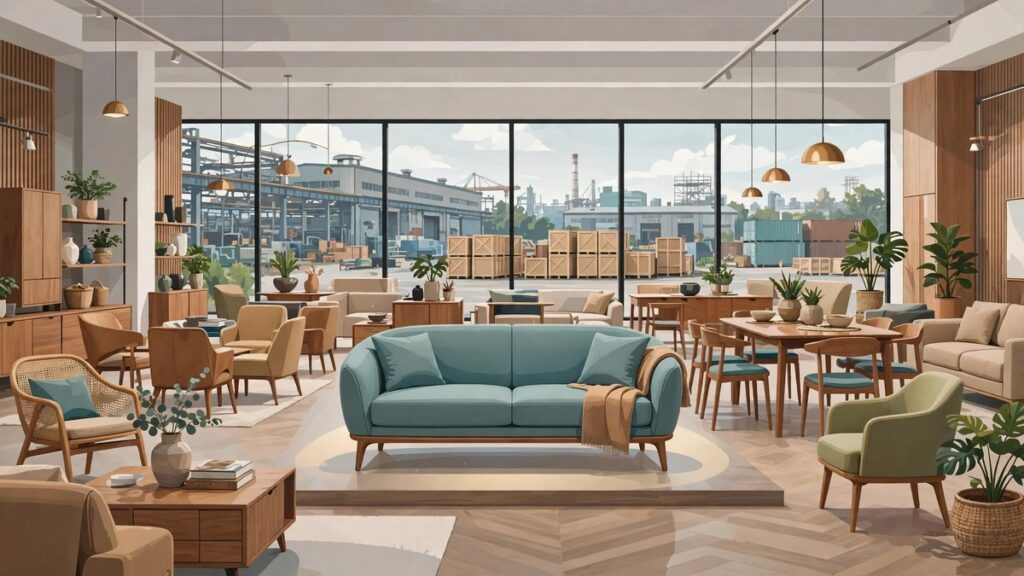
Foshan, a city of 9 million people in southern China, has become the world capital of furniture dupes, where factories copy luxury designer pieces and sell them for a fraction of the original price. Shoppers fly in from around the world, or order through WhatsApp, TikTok, AliExpress and Alibaba, to buy made-to-order copies of sofas, tables and beds.
According to WIRED, Foshan exports nearly $10 billion worth of couches, beds, bathroom vanities and other home goods each year. One London doctor, Shirley Bekker, flew to Foshan on 31 May 2025 and furnished her entire one-bedroom apartment for around 7,000 pounds, about $9,200, shipping everything home in a 20-foot container. A Togo-style sofa that sells for $4,800 from Design Within Reach can be found for about $200 on AliExpress.
Why it matters
What is happening in Foshan is bigger than cheap sofas. It is a revolt against the way luxury furniture has been sold for decades, and WIRED's reporting captures the mood through the people doing the buying. Bekker told WIRED she was not convinced a brand name justified the price, saying the idea that a name alone made furniture worth thousands was, in her words, a bit of nonsense. A New York University law professor who studies the knockoff economy, Christopher Sprigman, told WIRED he sees the beginnings of a revolt against the brandification of everything, with consumers doubting that brands offer quality to match their prices. When shoppers believe the premium pays for advertising rather than craftsmanship, the factory that copies the design starts to look like the honest seller.
Social media turned a local manufacturing hub into a global shopping destination. During the week of 13 April 2025, the number of videos urging Americans to buy directly from Chinese factories soared 250 percent, WIRED reported, and tens of thousands of videos were posted under hashtags like #ChineseFactory, many of them about furniture. Sellers post their phone numbers in the comments, buyers post their hauls, and the algorithm does the rest. One California mother on TikTok claimed she saved at least $100,000 furnishing her whole house directly from China, and her post drew more than 65,000 likes. The funnel is the feed itself: desire is created by a photo of a celebrity's living room, and the factory answers within days.
The speed is the part that should worry designers most. WIRED reported that after the 2026 Salone del Mobile furniture fair in Milan ended on 26 April, Foshan factories were already posting on Chinese social media by 11 May about mass-producing the Anywhere sofa by Edra, one of the fair's breakout products. A factory account described itself as a source factory specialising in high-end Italian minimal made-to-order one-to-one furniture dupes. That is a two-week turnaround from a Milan launch to a Foshan copy, and it compresses the whole business model of design-led furniture, which depends on exclusivity lasting long enough to repay the cost of creating something new. If exclusivity lasts two weeks, the economics of original design change completely.
Foshan itself is worth understanding as a place, not just a price. The Louvre International Furniture Exhibition Center in the city covers more than 4 million square feet and draws about 4 million visitors a year from more than 150 countries, with showrooms for over 2,000 Chinese brands and 400 European ones. The real factories sit a few miles away in Longjiang, a town of furniture shops, fabric suppliers and timber yards. Sourcing agents now run organised three-day shopping trips for as little as $170 per person, with pickups from train stations and airports. The city has built tourism infrastructure around furniture shopping, which shows how deliberately it has turned manufacturing into an experience.
What to watch next
Watch whether designers and brands fight back through law, technology or new business models. Photography is already banned in much of the Louvre to protect original designs, but a photo taken in Milan can reach a Foshan factory in hours, so enforcement at the showroom door may not be enough.
Watch the quality question too. Dupes promise the same look for less, but buyers ordering from thousands of miles away cannot easily check materials, safety or durability before a container ships. The shoppers who feel they won will keep posting, and the ones who feel burned will post louder.
Frequently asked questions
Where is Foshan and why does it matter for furniture?
Foshan is a city of about 9 million people in southern China and a major furniture manufacturing hub. Its factories export billions of dollars of furniture a year, and its Louvre exhibition centre draws about 4 million visitors from more than 150 countries.
How much can shoppers save with furniture dupes?
Savings can be dramatic. WIRED reported a Togo-style sofa selling for $4,800 from Design Within Reach available for about $200 on AliExpress, and one shopper furnished a whole London apartment for around 7,000 pounds after flying to Foshan.
How do people buy furniture from Foshan?
Buyers either fly to the city and shop with sourcing agents, or order through WhatsApp, TikTok, AliExpress or Alibaba. Sourcing agents offer organised three-day trips for as little as $170 per person.
Are furniture dupes legal?
That is contested. Some designs are protected and some are not, and enforcement is difficult when a copy can be produced within weeks of a launch. WIRED reported that some Foshan showrooms ban photography to protect original designs.


