
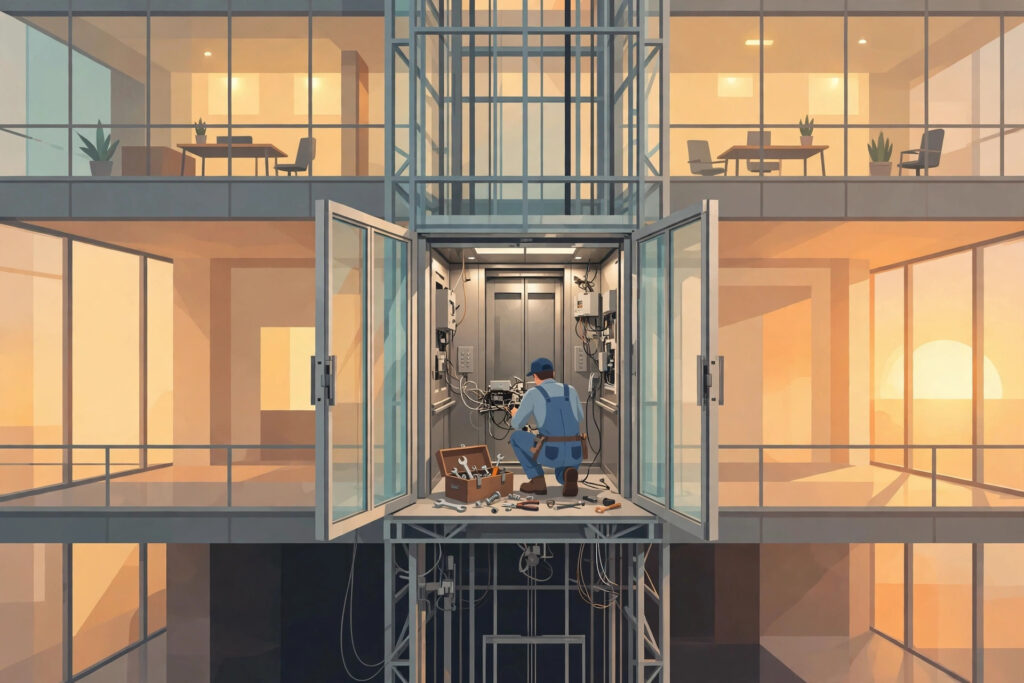
According to the BBC, a shortage of lift and escalator mechanics is leaving buildings waiting days for a diagnosis and weeks or months for repairs, even though experienced elevator mechanics in the United States can earn about $110,000 a year.
In the United States, becoming a lift technician takes a four-year apprenticeship, and Matt Hollinshead, president of the US National Association for Elevator Contractors, told the BBC that finding good technicians is becoming more difficult. The chief executive of Otis, one of the biggest lift makers, said in May that her company was struggling to hire enough staff to meet demand, and the firm says the shortage affects almost every part of the world.
The shortage is also a problem in the United Kingdom. Dave Cooper, president of the Chartered Institution of Building Services Engineers, told the BBC it is bad and getting worse, adding that food delivery companies have refused to deliver to flats above the ground floor because the lift is out of service. In Britain there are more than 250,000 lifts and 10,000 escalators in operation, according to SiteJobs, and nine times out of ten the problem is with the doors, according to field technician Lembesis of Parkway Elevators.
Why it matters
The lift is the most invisible piece of infrastructure in modern life, which is exactly why its labour shortage bites so hard. Nobody thinks about the mechanic until the doors refuse to open, the lift stops between floors, or an elderly resident realises the stairs are the only way down. A city can add thousands of flats, offices and hospital wards, but every one of them depends on a small, ageing pool of people who know how to keep a steel box moving safely up a shaft. When that pool shrinks, the building itself starts to fail its residents, and the failure shows up as missed appointments, undelivered food, and people trapped in their own homes.
Part of the problem is the training pipeline, and it is brutally slow by design. A four-year apprenticeship is a long time to ask a young person to commit, especially when the work itself is poorly understood outside the trade. Schools rarely present lift engineering as a career, and the job carries none of the glamour of software or design. The result is a trade that recruits by word of mouth and family connection while its workforce ages out. Every retirement removes decades of diagnostic instinct that no manual can replace, because a lift fault is rarely a single broken part; it is a puzzle of electrics, mechanics, software and wear, and the experienced mechanic reads it the way a doctor reads symptoms.
The pay paradox makes the shortage harder to explain and harder to fix. An experienced lift mechanic in the United States can earn about $110,000 a year, and in Britain experienced engineers command £50,000 or more, with specialists earning considerably more, according to Witness News. That is serious money for a trade that needs no university degree. Yet the vacancies persist, which tells us the barrier is not pay but awareness, access and status. Young people cannot choose a career they have never heard of, and parents cannot encourage a path they do not understand. Until the trade is visible in schools and technical colleges, the salary figures will keep surprising people and the vacancies will keep growing.
Manufacturers share some of the blame, and the BBC reporting points directly at it. Recruiter Matt Allred, host of The Elevator Careers Podcast, blames major lift companies in part for locking down maintenance contracts, making it difficult or impossible for third-party repairers to intervene when a lift fails. That model protects the manufacturer's revenue, but it narrows the market for independent mechanics and concentrates knowledge inside a few big firms. When two large manufacturers approached by the BBC declined interviews, it underlined how little public accountability exists in a sector that the public depends on every day.
Parts supply turns a staffing problem into a waiting problem. Entrepreneurs TV reports that manufacturing replacement components can take six to twelve weeks, so even when a technician is available, customers face extended downtime. Hollinshead told the BBC that weeks or months-long delays to repairs are not typically caused by staff shortages alone; often a particular part simply is not readily available. That distinction matters for building managers, because it means the fix is not only more mechanics but a better supply chain for the components that fail most often, starting with doors, which account for nine in ten faults.
There is a wider lesson here about the skilled trades in general. Societies spent a generation telling young people that success meant a degree and a desk, and now the people who keep the buildings running are scarce. The same pattern is visible in plumbing, electrical work and heating, but lifts are the sharpest example because the consequences of failure are immediate and physical. The solutions are unglamorous and well known: teach the basics in high schools and technical schools, as Hollinshead suggests; offer better tax breaks to companies that train mechanics, as Cooper proposes; and keep investing in training and attracting new workers, as Karen Slade of the Lift and Escalator Industry Association argues. None of that is difficult. What is difficult is deciding that this work matters before the next lift breaks down.
What to watch next
Watch whether governments act on the training proposals or leave the shortage to the market. Tax breaks for training, apprenticeship places in schools, and funding for technical colleges would all take years to show results, so the test is whether anyone starts now. Also watch the big manufacturers: if Otis, KONE, Schindler and their rivals open up maintenance contracts to independent firms, the pool of working mechanics could grow without a single new apprentice.
Watch too what happens to the buildings themselves. As cities build taller and older populations grow, demand for lifts will only rise, and a lift out of service for months is a serious problem for a hospital ward or a tower block full of older residents. The question is whether the industry treats this as a temporary hiring headache or as the structural shortage it increasingly looks like.
Frequently asked questions
Why are elevator mechanics called wizards?
Recruiters and technicians use the word because the job demands so many skills at once: electrical knowledge, mechanical expertise, problem-solving and safety checks. As one recruiter put it, these technicians amaze people with their ability to fix things, showing up and making a broken lift work again.
How long does it take to become a lift technician?
In the United States there is a four-year apprenticeship to become a lift technician. In the United Kingdom the recognised route is the Lift and Escalator Engineering Level 3 apprenticeship, followed by an NVQ Level 3 in lift engineering.
How much do elevator mechanics earn?
In the United States the average salary for a lift mechanic is about $110,000 a year. In the United Kingdom experienced engineers can earn £50,000 or more, with specialists earning considerably more, and advertised roles commonly pay £35,000 to £60,000.
What causes most lift breakdowns?
Nine times out of ten the problem is with the doors, according to field technician Lembesis. Delays are often made worse by parts shortages, with replacement components sometimes taking six to twelve weeks to manufacture.


