
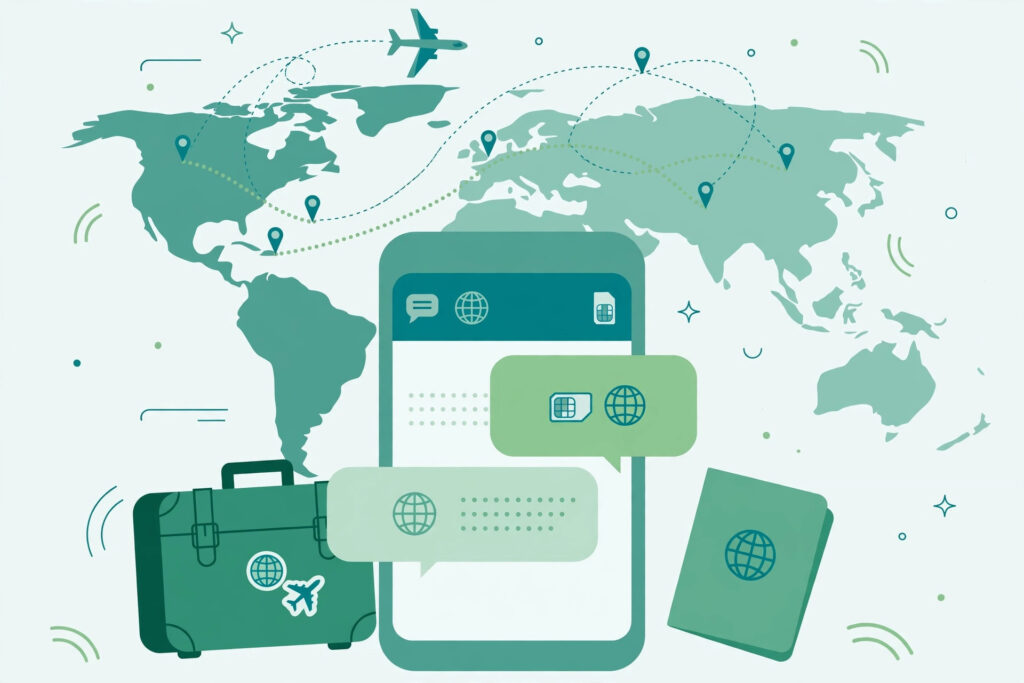
According to Engadget, WhatsApp is adding support for travel eSIMs directly inside the app, letting travellers buy and install a data-only eSIM in a few taps without leaving the chat they already use. The move, announced on 26 November 2026, is aimed at the familiar landing moment: no airport kiosk, no local SIM hunt, no roaming bill shock.
The feature works with eSIM providers and telecom partners including Verizon, Reliance Jio, Smart Axiata and Smart Communications, WhatsApp said. GSMArena reports the company describes the purchase as being as effortless as sending a message, with the whole process happening inside WhatsApp. The rollout will begin in select countries soon, though WhatsApp has not yet named the first countries, a launch date or prices.
Crucially, travellers keep their existing WhatsApp number, so contacts, groups and chats carry on exactly as normal while the eSIM supplies mobile data abroad. 9to5Mac notes the announcement came alongside other WhatsApp changes, including tests of view-once text messages and a cleaner iPhone interface, while the Android beta has been trying stickers with sound and scheduled messages.
Why it matters
The landing moment is the worst part of modern travel connectivity, and that is exactly the moment WhatsApp is targeting. A traveller arrives in a new country, the phone shows no service or a warning about roaming charges, and the choices are all bad: queue at an airport kiosk, hunt for a cafe with Wi-Fi, or pay the home carrier's daily roaming fee. By putting the purchase inside the app people already open first when they land, WhatsApp removes the friction at the precise point where it hurts most, and that is why this small feature could matter far more than its modest announcement suggests.
Distribution is the real story here. Standalone eSIM sellers have spent years building apps, buying search ads and explaining to travellers what an eSIM even is. WhatsApp does not need to explain anything, because it already sits on the phones of the people who need one. The purchase journey collapses from finding a provider, comparing plans, installing a profile and activating it, into a few taps inside a chat app. That is the kind of shortcut that can redraw a market overnight, which is presumably why one user on X, quoted by Engadget, declared that WhatsApp had just killed the entire eSIM industry.
That verdict is probably too sweeping, but the direction of travel is clear. Specialist eSIM providers will not disappear, because they can still compete on price, coverage and comparison across dozens of networks. What they lose is the discovery advantage: the casual traveller who never thought about eSIMs will now meet the option inside WhatsApp before ever searching for one. The survivors in that world will be the ones who sell through WhatsApp's partner programme or offer something the in-app store cannot, such as cheaper regional bundles or multi-country plans.
There is a tension inside the partner list that is worth watching. Verizon, Reliance Jio, Smart Axiata and Smart Communications are all carriers that currently earn good money from roaming fees, which are among the most profitable charges in telecoms. Selling a cheap local data eSIM inside WhatsApp could cannibalise exactly that revenue. The fact that they are signing up anyway suggests they would rather own a slice of the new flow than watch it go to someone else, and it also suggests WhatsApp's terms are generous enough to make the trade worthwhile, though the commercial details have not been disclosed.
Pricing is the unanswered question that will decide whether this is a convenience for wealthy travellers or a genuine mass-market shift. WhatsApp has said nothing about what the eSIMs will cost, and there are two plausible models: prices close to local prepaid data, which would make the feature a clear win for travellers, or a premium for the convenience of buying inside the app, which would leave room for the standalone sellers to undercut it. The answer will also shape how regulators look at the move, since a messaging app that also sells connectivity is a new kind of bundle.
Finally, this is another step in the quiet transformation of messaging apps into travel infrastructure. WhatsApp already carries the boarding pass screenshot, the hotel confirmation and the group chat that coordinates the trip. Adding the connectivity itself closes the loop: the app that organises the journey now also powers it. For travellers that is genuinely useful. For the companies that used to sell each piece of the journey separately, it is another reminder that the most valuable real estate in travel is no longer the airport shop, but the screen a traveller is already looking at.
What to watch next
Watch which countries get the feature first, and at what price. The launch list will reveal whether WhatsApp is starting where roaming pain is worst, such as the United States and Europe, or where its partners are strongest, such as India and the Philippines. Pricing will show whether this is a mass-market play or a premium convenience.
Watch the response from rivals and regulators. Apple and Google both have their own travel and connectivity ambitions, and carriers that stayed out of the partner list may push back if in-app eSIMs start eating roaming revenue. Any sign of a competing offer from another messaging app would confirm that WhatsApp has opened a new front in the platform wars.
Frequently asked questions
What is a WhatsApp travel eSIM?
WhatsApp travel eSIMs are data-only digital SIM cards that travellers can buy and install directly inside WhatsApp, giving their phone mobile data abroad without a physical SIM card or a visit to an airport kiosk.
Will I keep my WhatsApp number?
Yes. The eSIM supplies mobile data only, so your existing WhatsApp number, contacts, groups and chats all stay exactly as they are while you travel.
Which countries will get travel eSIMs first?
WhatsApp has not named the first countries. It says the rollout will begin in select countries soon, working with partners including Verizon, Reliance Jio, Smart Axiata and Smart Communications.
How much will a WhatsApp travel eSIM cost?
Pricing has not been announced. WhatsApp says the purchase will take just a few taps inside the app, but the cost of the data plans will only become clear when the feature launches.


