
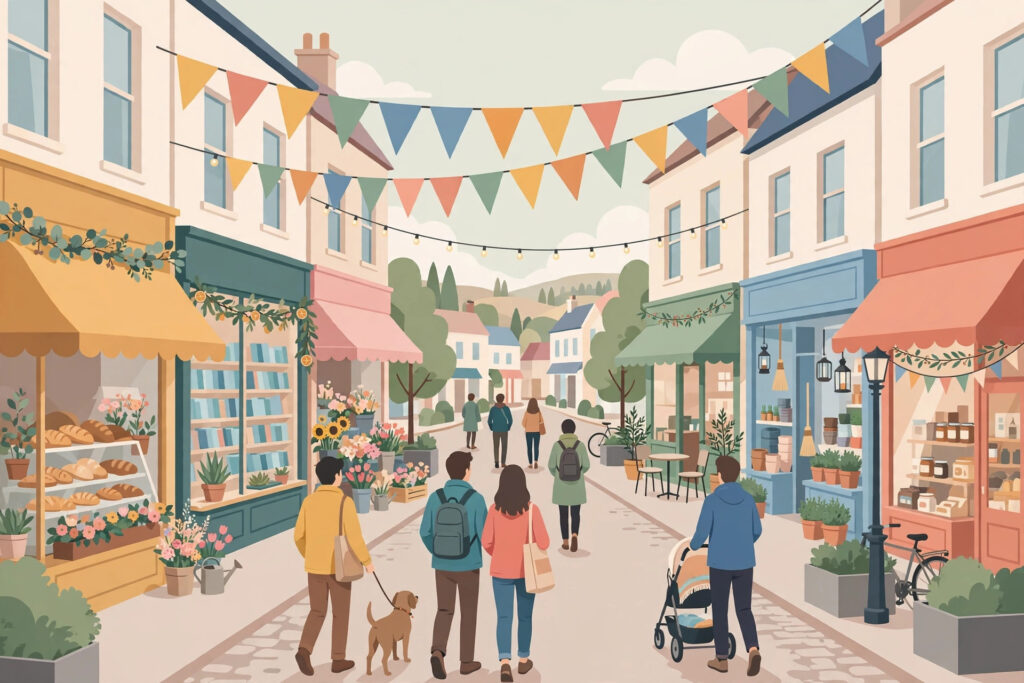
According to New Mexico MainStreet, Small Business Saturday falls on 28 November 2026, and $68 of every $100 spent with local shops stays in the community, against only $43 of every $100 spent at a chain store, a gap that explains why towns across the United States are staging promotions, raffles and gift-card giveaways this weekend.
Small Business Saturday was created during the 2010 recession by American Express, and it has been celebrated in every US state since, falling on the Saturday after Thanksgiving, two days after Black Friday. This year towns are going all out: Downtown Evanston in Illinois offers a $20 e-gift card for spending $100 or more, Downtown Rutland in Vermont lists 19 shops with specials plus free gift wrapping and a raffle, and Downtown Ames in Iowa is giving away tote bags packed with coupons from 27 shops, with only seven bags per store.
Forbes argues the day means big business for Main Street, and the local numbers back that up. Rochester Main Street in New Hampshire gives an entry into two $100 gift card drawings for every $15 spent downtown, Morgantown in West Virginia offers the first 75 shoppers a free Shop Small tote bag with Santa, hot cocoa and a holiday market, and Matteson in Illinois lists 17 participating businesses with deals from 10% off services to 30% off merchandise. Most small businesses rely on holiday sales as part of their annual income, according to New Mexico MainStreet.
Why it matters
The $68 versus $43 figure is the whole argument in one number, and it is worth understanding properly. When money is spent at a locally owned shop, more of it stays in the community because the owner lives nearby, hires locally, buys from local suppliers and pays local taxes. When it is spent at a chain, more of it leaves as head-office profit, centralised purchasing and distant shareholders. That is not an argument against chains, which provide jobs and convenience, but it explains why a day devoted to small shops has an economic logic beyond sentiment. A community that spends locally is, in a small but real way, investing in itself.
Small Business Saturday also works because it sits in the shadow of Black Friday, and the contrast is the point. Black Friday is about scale, speed and the lowest price, usually online or at a big-box store. Small Business Saturday is about the opposite: the bookshop that knows your taste, the bakery that remembers your order, the hardware store where someone actually explains how to fix the tap. The day gives people permission to slow down and shop differently, and the promotions, passports, raffles and tote bags are really excuses to get people through a dozen doors they might otherwise walk past all year.
For the businesses themselves, the stakes are much higher than one Saturday's takings. The holiday season can decide whether a small shop survives the quiet months of January and February, and a new customer gained on Small Business Saturday may keep coming back all year. That is why towns coordinate so carefully: Evanston's passport and trolley, Ames's tote bag hunt, Morgantown's gift guide and Santa visit are all designed to turn a single purchase into a day out, and a day out into a habit. A lone shop discounting on its own achieves far less than a whole street acting together.
There is a harder truth underneath the celebration, which is that small shops face structural disadvantages no single day can fix. Rents on high streets keep rising, online giants can undercut on price and delivery, and the administrative burden of running a small business, from tax to staffing to compliance, falls heavily on owners who are also the manager, the buyer and the cashier. Small Business Saturday does not solve any of that. What it does is remind the community that these businesses exist and that their survival is partly a choice shoppers make, one purchase at a time.
The day has also evolved with the times. Many of the promotions this year blend physical and digital: gift cards that work online, social media passports, and shops that offer in-store collection for online orders. That matters, because the competition is no longer just the shop across the street but the phone in every customer's pocket. The small businesses that thrive are the ones that treat Small Business Saturday as a showcase for what they offer all year, personal service, distinctive products and local knowledge, rather than as a one-day sale that competes on price with Amazon.
For shoppers, the practical case is simple. A gift bought on Main Street is more likely to be distinctive, the money stays local, and the experience is usually pleasanter than a crowded mall or an endless scroll. The advice from the towns themselves is equally simple: plan a route, bring the passport or receipt book, ask each shop what counts, and keep receipts, because many of the raffles and gift-card draws depend on them. If the day works as intended, shoppers leave with better gifts and the street leaves with a stronger December.
What to watch next
Watch whether the day's spending holds up against a tough year for consumers. With interest rates rising in the US, Britain and Australia, and household budgets under pressure, discretionary spending is the first thing to shrink. If Small Business Saturday still delivers strong footfall, it will show that shoppers are choosing local even when money is tight, which is a stronger signal than a good year would be.
Watch too what happens after the weekend. The real test of Small Business Saturday is not Saturday's takings but whether the new customers come back in January, when there are no tote bags and no Santa. Towns that follow up with loyalty schemes, gift guides and events through the winter will find out whether the day built lasting habits or just a pleasant Saturday.
Frequently asked questions
When is Small Business Saturday 2026?
Small Business Saturday is Saturday, 28 November 2026, two days after Thanksgiving and the day after Black Friday. It is celebrated in every US state.
How much of my money stays local when I shop small?
According to New Mexico MainStreet, for every $100 spent locally, $68 stays local and recirculates, while for every $100 spent at a chain store, only $43 stays local.
Who created Small Business Saturday?
It was created during the 2010 recession by American Express, and has since been promoted with free marketing materials and a Neighborhood Champion programme, in partnership with organisations such as Main Street America.
What kind of deals can shoppers expect?
Towns offer passports, raffles, gift-card draws and discounts. Examples this year include $20 back on $100 spent in Evanston, Illinois, 19 shops with specials in Rutland, Vermont, and tote bags with coupons from 27 shops in Ames, Iowa.


