
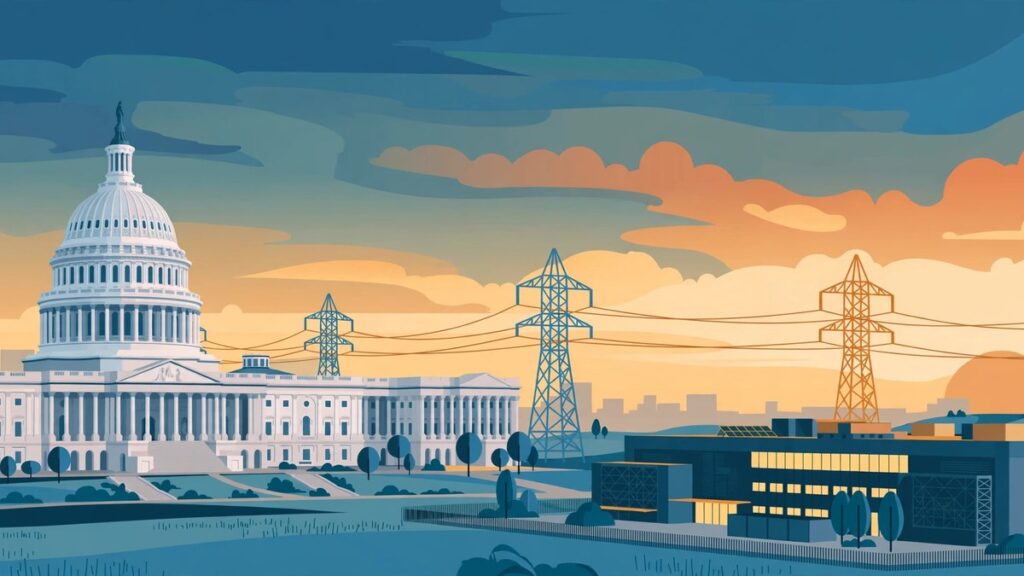
The US Senate has passed a bipartisan bill to speed up permits for power plants, transmission lines and other energy infrastructure, and to make data centres pay for the energy they use. The 62-33 vote on Thursday was Congress's first major action since midterm elections that handed both chambers to the Democrats.
The bill, formally the Bipartisan American Affordability and Jobs Act of 2026, would overhaul several environmental laws to make it easier to build energy infrastructure, the Associated Press reported. It drew criticism from Democrats and environmental groups over limits on judicial review and changes to the National Environmental Policy Act, the Clean Water Act and the Endangered Species Act. Major industry groups in clean energy and oil and gas support it as a way to deliver more electricity to the grid and avoid delays that can stretch a decade or more.
Why it matters
The politics of this bill are as important as its contents. It passed 62-33, with fifteen Democrats, including Senate Minority Leader Chuck Schumer, voting in favour, and two Republicans voting against. That is the shape of a genuinely bipartisan deal in a Congress that has just changed hands: the midterms handed both chambers to the Democrats, and the first major bill since then was written by two Democrats and two Republicans and signed off by President Trump, who called it a big win for US energy independence and dominance. Energy prices helped decide the election, with voters angry about bills that have risen more than 6 percent in the past year and 39 percent in five years, and both parties now want to be seen building things rather than blocking them.
The data centre provisions are the most consequential part of the package, and the most copied idea in it. Large computing facilities would pay the full incremental cost of the generation, transmission and distribution built to serve them, utilities would collect financial assurances before building, and a customer that leaves early would still owe the unrecovered costs. That is a simple principle, the party that triggers the cost pays for it, but it is a direct answer to a real grievance: households watching their electricity bills rise while data centres consume ever more power. If the model works, expect other countries to copy it; the argument that AI infrastructure should pay its own way is now mainstream on both sides of American politics.
The environmental trade-off is real and should not be waved away. The bill would overhaul bedrock laws including the National Environmental Policy Act, the Clean Water Act and the Endangered Species Act, shorten the window for legal challenges to 150 days, and limit judicial review. Supporters say the current process can stretch a decade or more, and that clean energy accounts for 85 percent of the capacity waiting to connect, so faster permits help renewables most. Critics, including Democrats and environmental groups, say the changes weaken safeguards and tribal consultation. Both claims can be true at once: a system that takes ten years to approve a transmission line is broken, and a system that lets projects proceed while courts review them can also bury legitimate objections.
Timeline: the Senate passed the Bipartisan American Affordability and Jobs Act on Thursday 19 November 2026 by 62 votes to 33, after the bill was carried as a substitute on H.R. 2347, having begun as S. 5653. The bill now goes to the House, which approved a more limited, industry-friendly version last year. If the House passes the Senate's version, the data centre cost rules would cover sites that connect after enactment, and many provisions would need agency rulemaking before they take effect.
What to watch next
Watch the House. The bill now goes there, and the House approved a more limited, industry-friendly version last year, so the Senate's broader package, with its data centre cost rules and environmental law changes, will face a negotiation that could strip out the most contested parts.
Watch household electricity prices too. The promise of lower bills is the bill's political justification, and the Rhodium Group's estimate of $50 to $78 a year by 2040 is modest. If prices keep rising while permits get faster, the argument that supply alone fixes affordability will be tested hard.
Frequently asked questions
What does the Senate permitting bill do?
The Bipartisan American Affordability and Jobs Act of 2026 speeds up permitting reviews for power plants, transmission lines and other energy infrastructure, and makes data centres pay for the energy they use.
How did the Senate vote on the permitting bill?
The Senate passed the bill 62-33 on Thursday 19 November 2026. Fifteen Democrats, including Chuck Schumer, voted in favour, and two Republicans voted against. The bill now goes to the House.
How would data centres pay for energy under the bill?
Large data centres would pay the full incremental cost of generation, transmission and distribution built to serve them, with utilities collecting financial assurances before building and early leavers still owing unrecovered costs.
Would the bill lower household electricity bills?
The Rhodium Group estimates the bill could reduce annual household electricity bills by $50 to $78 by 2040, by boosting power supply. Supporters say faster construction will add supply and lower costs.
Why do environmental groups oppose the bill?
The bill would amend the National Environmental Policy Act, the Clean Water Act, the Endangered Species Act and other laws, shortening legal challenge windows to 150 days and limiting judicial review, drawing criticism from Democrats and environmental groups.


