
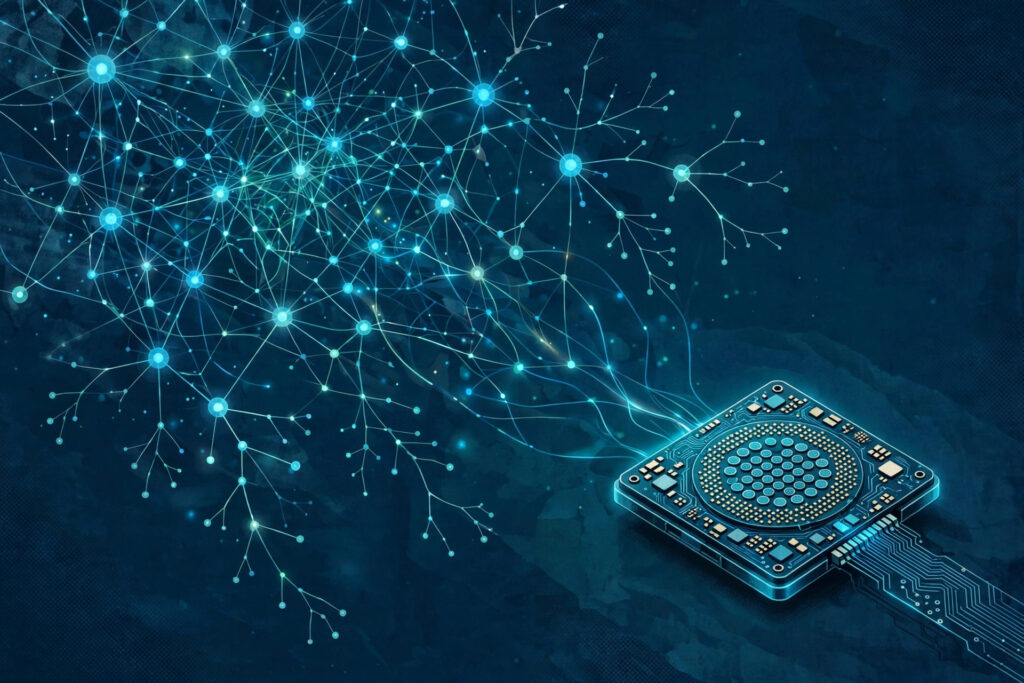
Science Corporation, the medical technology startup founded by former Neuralink president Max Hodak in 2021, has raised a $400 million Series D funding round that values the company at $3.5 billion, according to a person familiar with the deal. Backers included Khosla Ventures, the Ackman Oxman Institute, Tenet Healthcare, 885 Capital, Y Combinator and PLC Neurotech.
The company's first product is PRIMA, a wearable and implantable chip that helps people with age-related macular degeneration recover some vision. The device is approved in Europe and available in Germany, and it is now being trialled for Stargardt disease, another condition that causes blindness.
Science aims to bring PRIMA to the United States through the Food and Drug Administration's Humanitarian Device Exemption, which allows experimental medical technology to be used for rare conditions. Its longer-term ambition is a bio-hybrid sensor built from cultured neurons and silicon that could connect directly to the human brain.
Why is a $3.5 billion valuation significant for brain technology?
The Science Corporation valuation is striking because it is more than double the figure reported for Science's previous round, and it arrives at a moment when brain-computer interfaces are moving from laboratory demonstrations to real patients. PRIMA is not a promise on a slide; it is a device already in use in Europe, helping people with a common cause of vision loss in older adults. Investors are paying for that rare combination of a shipped medical product and a much larger research ambition behind it.
That combination also explains why the valuation should be read with care. The $3.5 billion figure comes from a person familiar with the deal, not from the company itself, and the company's own announcement confirmed the $400 million raised rather than the valuation. In private funding rounds, valuations are often based on expectations about future products, and Science's most ambitious product, the bio-hybrid brain sensor, has not yet been tested in people. The market is betting that the team that delivered PRIMA can deliver something far harder next.
The regulatory path in the United States is the next real test. The Humanitarian Device Exemption is designed for rare conditions, and Science has argued that advanced macular degeneration in both eyes is uncommon enough to qualify. If that route succeeds, PRIMA could reach American patients sooner than a full approval process would allow. If it stalls, the company will need to fund a longer and more expensive trial programme, which is exactly what the new $400 million is for.
For the wider neurotechnology field, Science's rise matters because it offers a different model from the headline-grabbing brain implant companies. Instead of starting with the brain itself, it started with the eye, where a small chip can restore useful vision and where regulators, doctors and patients already understand the risks. That patient, step-by-step approach may prove to be the faster route to helping people, even if it attracts less attention than a direct brain interface.
What should you watch next?
Watch the results of the Stargardt disease trial and any news on the US regulatory route for PRIMA. Both will show whether the device can help a wider group of patients than its first approved use.
Watch also for the first human trials of the bio-hybrid sensor, which Science is designing with Yale neurosurgery professor Murat Gunel. Any timeline, or any early safety data, will be a major signal for the whole brain-interface field.
Frequently asked questions
How much did Science Corporation raise?
Science Corporation raised $400 million in a Series D funding round, with a reported valuation of $3.5 billion.
What is PRIMA?
PRIMA is Science Corporation’s first product, a wearable and implantable chip that helps people with age-related macular degeneration recover some vision.
Who founded Science Corporation?
Science Corporation was founded in 2021 by Max Hodak, the former president of Neuralink.
What is Science Corporation’s long-term goal?
Its long-term goal is a bio-hybrid sensor built from cultured neurons and silicon that could connect directly to the human brain.


