
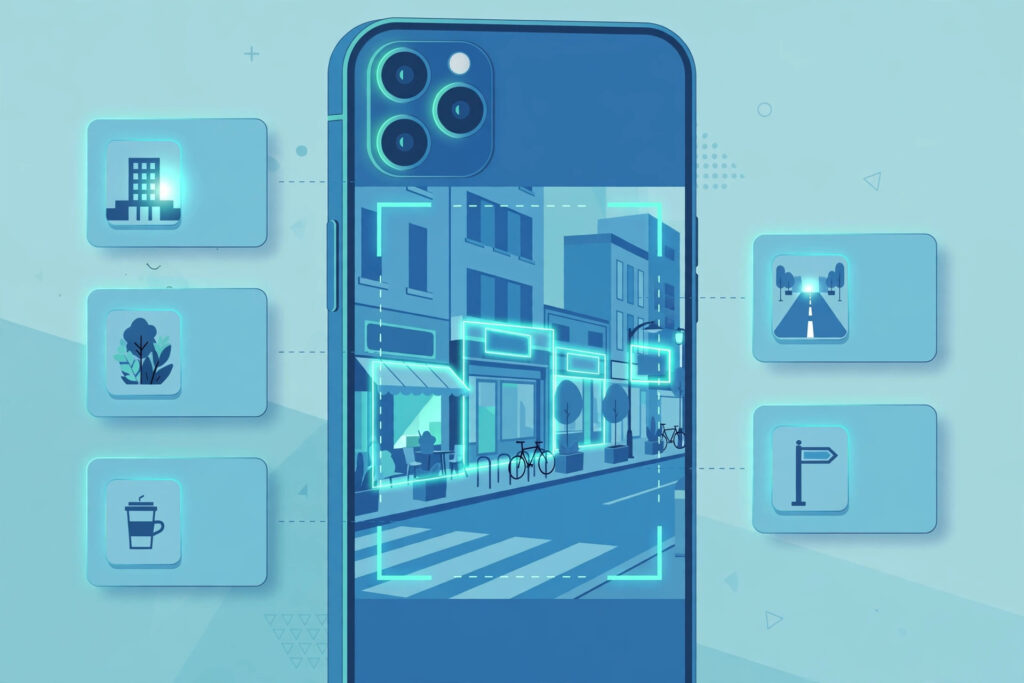
According to Engadget, Samsung is adding an AI Vision mode to its Galaxy camera app, based on code strings found in the One UI 9.5 Beta 1 software, in a feature that could mirror Apple's Siri mode in the iPhone camera in iOS 27.
The feature comes from an Android Authority teardown of One UI 9.5 Beta 1, published on 27 November. Vision mode, identified in code as SM_VISION_AI, would sit in the camera mode carousel alongside Photo and Video. Point the camera at a landmark, a sign, a product or a plant, and the viewfinder shows an AI-written summary of the scene as a scene card, with tappable keywords, suggested actions, a text-extraction tool and a flashlight toggle. An Ask button sends the current frame to Google's Gemini app for follow-up questions, while Translate hands it to Samsung's AI Vision app, built on what remains of Bixby Vision. A footer inside the mode reads that the content was generated by AI, and pressing the shutter freezes the preview rather than saving a photo.
Neither Vision mode nor a second discovery in the same code, Auto portrait, works on any phone you can buy today. Both depend on a Samsung background component called Visual Agent Service, absent from the Galaxy S26 Ultra, so Android Authority could not tell whether the scene summary runs on the phone or in the cloud. Auto portrait, labelled Portrait effect in Photo, applies background blur in the standard Photo mode when the camera detects a face or a pet, with a viewfinder toggle and blur-intensity slider. The One UI 9.5 beta opened on 18 November 2026 to Galaxy S26 owners in Germany, India, Korea, Poland, the UK and the US. Samsung has not announced either feature, and the code points to a debut on the Galaxy S27 series, rumoured for January 2027.
Why it matters
The camera is becoming a search box, and that is the real story here. For twenty years, the phone camera has been a device for capturing the world. Vision mode turns it into a device for understanding the world, one that answers before you have even asked a question. Point it at a monument and you get its history; point it at a sign and you get a translation. Samsung is not inventing this idea, since Google Lens, Circle to Search and Gemini Live already do versions of it, but Vision mode pulls those scattered abilities into the place people already go when they want to look at something: the camera itself.
Samsung Vision mode invites comparison with Apple, and Samsung will not mind it. Apple added a Siri mode to the Camera app in iOS 27, building on Visual Intelligence, so pointing an iPhone at something and asking about it is now a standard smartphone trick. Samsung's twist is the step before the question: the pre-written scene card, with its summary, keywords and suggested actions, gives instant context the moment you point the camera, and only hands harder questions to Gemini. It is a small design difference, but it changes the feature from a tool you invoke to an assistant already working. Whether users prefer answers unprompted or asking for them deliberately is an open question, and the two companies have now placed opposite bets.
The detail that deserves the most attention is the one most likely to be overlooked: the footer that labels the summary as AI-generated. Samsung is labelling the output before you ever see it, which fits how it has handled AI features across One UI. As AI summaries become the first thing people see when they point a camera at the world, the risk is that a confident-sounding error is taken as fact, whether a wrong translation, a misidentified plant or a hallucinated historical claim. A label does not fix that, but it reminds the user that what they are reading was generated rather than observed, and that distinction matters more with every AI feature that ships.
The hardware question is the most interesting strategic signal in the teardown. Vision mode does not work on the Galaxy S26 Ultra, the most powerful phone Samsung sells today, because it needs a background component and hardware the phone simply does not have. Features are now being designed for hardware that does not exist yet, and the software beta previews a phone a year away rather than updating the phone in your pocket. It also suggests the scene summary may need dedicated processing current chips cannot provide, raising the question of whether it runs on the device at all, or in the cloud.
That on-device versus cloud question matters more than it might seem. If the summary is generated in the cloud, then every time you point your camera at something, an image of your surroundings is sent to a server, processed and answered. That is a privacy trade-off users should understand before they use the feature casually, and Samsung has not yet explained it, because the company has not announced the feature at all. If it runs on the device, it showcases Samsung's chip ambitions and offers a genuine privacy advantage over cloud rivals. The answer will shape how the feature is received.
There is also a lesson here about how technology news is made now. Nobody at Samsung announced Vision mode. It was found by reading the code of a beta release, line by line, and the story spread from a teardown to Engadget to a dozen other outlets within a day. Beta code is a strange kind of source: detailed and specific, yet describing something that may never ship, since unfinished features can change or vanish before release. Samsung has not confirmed anything, and the honest framing is that Vision mode is a direction, not a promise. But the code is detailed enough, and the strategic logic clear enough, to take seriously as a picture of where Samsung thinks the camera is going.
Timeline: on 18 November 2026, Samsung opened the One UI 9.5 beta to Galaxy S26 owners in Germany, India, Korea, Poland, the UK and the US. On 27 November 2026, Android Authority published its teardown of One UI 9.5 Beta 1, revealing Vision mode and Auto portrait, and Engadget reported the findings the same day. The Galaxy S27 series, the likely debut device for both features, is rumoured for January 2027.
What to watch next
Watch the Galaxy S27 launch, expected in January 2027, for confirmation that Vision mode and Auto portrait ship, and for Samsung's answer to the on-device versus cloud question. If Visual Agent Service arrives with the new phones, the features could work on day one; if not, they may arrive later in a One UI 9.5 update.
Watch too whether Vision mode reaches older Galaxy phones. If it stays exclusive to the S27, it becomes a reason to upgrade; if it spreads to the S26 and earlier models, it becomes a platform feature. Samsung's choice will reveal whether it sees AI camera features as a selling point for new hardware or as a service for its whole user base.
Frequently asked questions
What is Samsung’s Vision mode?
Vision mode is an AI feature found in One UI 9.5 Beta 1 code. It sits in the Galaxy Camera app’s mode carousel and shows an AI-written summary of whatever the camera sees, with tappable keywords, suggested actions, text extraction and Ask and Translate buttons.
How does Vision mode work with Gemini?
The viewfinder first shows a pre-written scene card with a summary and keywords. Tapping Ask or a keyword sends the frame to Google’s Gemini app for follow-up questions, while Translate hands it to Samsung’s AI Vision app.
Will Vision mode work on my Galaxy phone?
Not yet, and possibly not on current phones at all. Vision mode depends on a Samsung component called Visual Agent Service, which is absent from the Galaxy S26 Ultra, and both features are expected to debut on the Galaxy S27 series.
What is Auto portrait?
Auto portrait is a second feature in the same beta code. It automatically applies background blur in the standard Photo mode when the camera detects a face or a pet, with a viewfinder toggle and blur-intensity slider, instead of requiring a switch to Portrait mode.


