
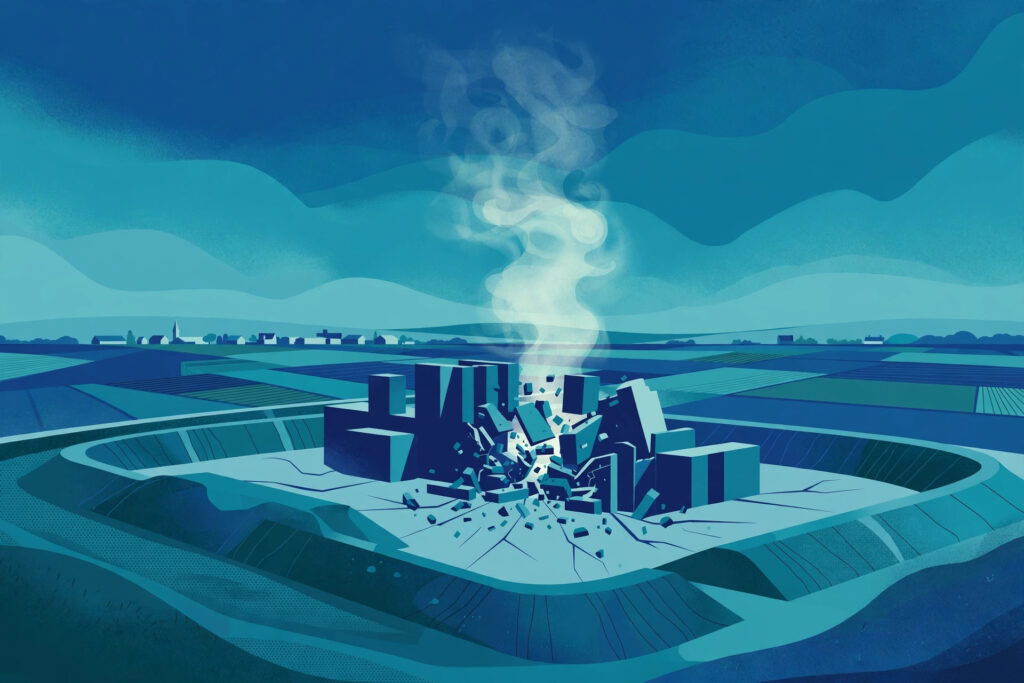
The US Army has detonated nearly five tons of unstable lead azide explosives at its ammunition plant in Iowa, calling the controlled blast a huge success. Army officials say early air monitoring detected no lead, after days of public alarm about a toxic plume, lawsuits and three delays to a disposal operation that residents had watched with deep unease.
The Army intentionally blew up the nation's entire Iowa lead azide stockpile, a chemical used to make explosives, at the Iowa Army Ammunition Plant in Middletown on Wednesday 25 November. Officials said the five tons of material, stored in 68 barrels in two bunkers, had degraded and were at risk of exploding uncontrollably as temperatures cooled. The stockpile had been brought to Iowa from bases around the country in 2009.
Acting Secretary of the Army Adam Telle called the controlled, mitigated detonation a huge success, and Major General Eric Shirley, who led the operation, said all of the lead azide barrels were definitively removed, with no secondary explosions and no infrastructure damage. The Army surrounded the bunkers with concrete and sand barriers two stories high, ballistic gels and foams, and more than 100,000 gallons of water to tamp down the plume. Environmental Protection Agency air monitors reported no lead in the air around the plant in the immediate aftermath, though researchers said final results were not yet in. The blast had originally been planned for the previous Friday but was delayed three times amid lawsuits and public concern.
Why did the Army choose to blow it up?
The Army's reasoning was stark, and it is worth understanding on its own terms. Lead azide is a sensitive explosive used in military munitions since the First World War, and the stockpile in Iowa had degraded over more than a decade in storage. Officials said the material was at risk of exploding uncontrollably as temperatures cooled, and that inaction was no longer an option. Against that risk, the Army weighed a controlled detonation behind earthen barriers, foam and gel blocks, and more than 100,000 gallons of water, and decided that a planned blast was safer than waiting for an unplanned one. That is a defensible calculation, but it is also one that only looks good if the mitigation works, which is why the early air monitoring results mattered so much to the Army's public case.
The way the operation was communicated is the part that will be remembered, and it is a case study in how not to do it. The exact plan was announced just days in advance, setting off alarm about toxic lead dust, frustration over the lack of information, lawsuits from environmental groups and three changes of date. Residents within 20 miles were told to shelter in place, and a Republican congressman from neighbouring Illinois called the holiday-eve scheduling and lack of communication unconscionable. When a government asks a community to trust it with a toxic explosion, the trust has to be built before the announcement, not during the countdown. The Army's barriers and gels may have worked, but the communication did not, and that failure will shape how the next such operation is received.
The science of the risk is also less settled than the Army's triumphant language suggests. Lead is a heavy metal that is not safe at any level, and it is especially dangerous to children and pregnant women. The Environmental Protection Agency's real-time air monitors reported no airborne lead in the immediate aftermath, and the Army said its mitigation measures had wildly exceeded expectations. But researchers quoted in reporting noted that the final results are not yet in, and that more testing is needed to know whether lead was dispersed in ways the early monitors could not detect. A plume that dissipates quickly is reassuring, but it is not the same as proof that no lead reached homes and farms downwind. The honest statement is that the early signs are good and the full picture will take time.
There is a wider question lurking behind this single stockpile. The lead azide had been brought to Iowa from bases around the country in 2009 and stored in case the military needed it again, which means the United States has been accumulating ageing, unstable munitions for decades without a clear plan for disposing of them safely. This operation destroyed the nation's entire stockpile of lead azide, according to reporting, but other ageing explosives and chemicals are stored at other sites, and the same dilemma, detonate now or risk an accident later, will return. The lesson of Iowa should be that disposal plans need to be made years in advance, with communities involved from the start, rather than improvised in a week under a court deadline.
Timeline: the Iowa lead azide disposal
- 2009: The lead azide stockpile is brought to Iowa from bases around the country and stored at the Iowa Army Ammunition Plant in Middletown.
- 20 November 2026: The controlled detonation is originally planned for this Friday, then delayed three times amid lawsuits and public concern about toxic lead dust.
- 23 November 2026: A court lifts the hold on the detonation on Monday night.
- 25 November 2026: The Army detonates nearly five tons of lead azide in 68 barrels. Army officials call the blast a huge success, and Environmental Protection Agency air monitors report no lead in the air around the plant in the immediate aftermath, though researchers say final results are not yet in.
What should you watch next?
Watch the full environmental results. The early EPA readings are encouraging, but soil and air testing over the coming weeks will show whether any lead was dispersed, and whether residents' fears were justified.
Watch whether the Army changes how it handles the next disposal. If future operations are announced earlier, with more information and genuine community consultation, Iowa will have taught a useful lesson. If the same rushed pattern repeats, the next stockpile will produce the same alarm.
Frequently asked questions
What is lead azide?
Lead azide is an explosive used in military munitions since the First World War. The stockpile in Iowa had degraded over more than a decade and was at risk of exploding uncontrollably.
How much was detonated?
About 9,500 pounds, or nearly five tons, of lead azide in 68 barrels, stored in two bunkers at the Iowa Army Ammunition Plant in Middletown.
Was the detonation a success?
The Army said the blast destroyed all 68 barrels with no secondary explosions, no kickout and no infrastructure damage, and that EPA air monitors detected no lead in the immediate aftermath.
Why was the blast delayed?
The detonation was delayed three times after lawsuits from environmental groups and public concern about toxic lead dust. A court lifted the hold on Monday night, and the blast went ahead on Wednesday.
Why were people worried about lead?
Lead is a heavy metal that is not safe at any level and is especially dangerous to children and pregnant women, which is why residents feared a toxic plume.


