
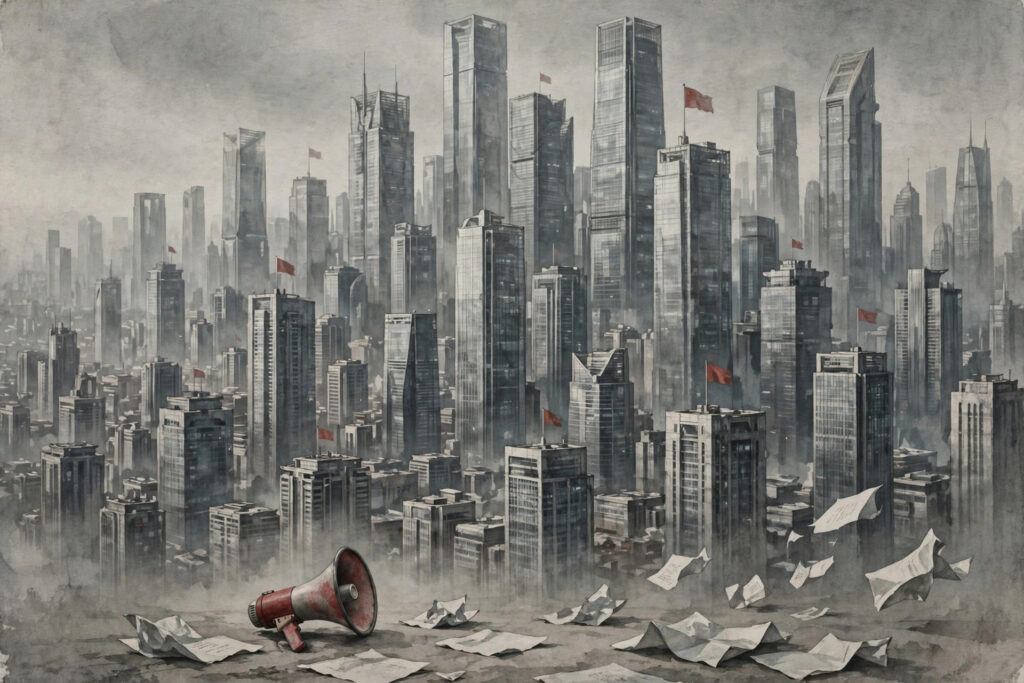
According to Grom Press, Uyghur activist Dolkun Isa says the shrinking crowds at protests are the clearest sign his cause is slipping off the world's radar, with rallies that drew thousands in 2018 now struggling to gather even 500 people.
Grom Press reported that reports in 2018 said China had detained up to a million Uyghurs and other Muslims in mass internment camps in Xinjiang, prompting protests, trade bans, sanctions against senior Chinese officials, asset freezes and parliamentary condemnations in at least nine countries. Activists now say Beijing offers exiles family reunions, money and safety in exchange for information about their networks and support for pro-party narratives — claims the Chinese embassy in the United Kingdom dismissed. Uyghur journalist Arslan Hidayat, who runs Kashgar Times in Australia, said he has interviewed at least a dozen exiles invited back to China on condition that they provide information to Chinese agents.
In July, Tibetan activist Lobga Rangzen died after setting himself on fire outside the United Nations headquarters in New York to protest China's new ethnic unity law, which requires minorities including Tibetans to learn Mandarin. The United Nations called the incident absolutely tragic, but attention quickly faded, according to Amnesty International. China's human rights record was not mentioned in any of the three summits Xi Jinping and Donald Trump held this year, including one in Shenzhen last week, Grom Press reported, while Chinese authorities say Xinjiang recorded more than 300 million tourist visits last year — more than double the 2018 figure.
Why it matters
The protest crowd is a movement's vital sign, and Dolkun Isa is reading it with alarm. In 2018, the year reports emerged that China had detained up to a million Uyghurs and other Muslims in mass internment camps in Xinjiang, thousands marched. Today, organisers struggle to gather even 500. That collapse is not about one rally going badly; it is about a cause losing its audience, its volunteers and its visibility in the space of eight years. When the crowd shrinks, so does the pressure on governments — and the activists know it.
The second force at work is China's economic weight, which has changed what criticism costs. Grom Press noted that Chinese electric vehicles fill highways from Brazil to Belgium, and that Chinese batteries, solar panels, AI models and even Labubu dolls are woven into daily life almost everywhere. A government that depends on Chinese goods, investment or markets thinks twice before condemning Beijing, and that calculation now sits inside almost every foreign ministry. Pulitzer Prize-winning journalist Ian Johnson, who has reported on Chinese civil society for years, told the BBC that China's economic muscle has earned it respect abroad and reshaped foreign policy — while Western governments have grown more inward-looking and populist, pushing human rights down their priority lists.
The timeline shows how the pressure built, step by step. In 2018, reports of mass internment camps in Xinjiang drew international protests, trade bans, sanctions on senior Chinese officials, asset freezes and parliamentary condemnations in at least nine countries. Dolkun Isa led the Munich-based World Uyghur Congress from 2017 to 2024. In October 2024, a Uyghur businessman in Turkey accepted an invitation to visit family in Xinjiang and found the experience suffused with fear and self-censorship. In January 2026, China's consul-general in Istanbul sent off about 30 participants returning to Xinjiang. On 12 March 2026, China passed its ethnic unity law. On 1 July it took effect. On 2 July, Tibetan activist Lobga Rangzen died outside the United Nations headquarters in New York. Last week, Xi Jinping and Donald Trump held a summit in Shenzhen — the third of the year — and China's human rights record was not mentioned at any of them.
The most corrosive tactic the activists describe is not a ban or a beating; it is an invitation. Grom Press reported that Beijing has offered exiles family reunions, money and the promise of safety in return for information about their networks and support for pro-party narratives. Uyghur journalist Arslan Hidayat, who runs Kashgar Times from Australia, said he has interviewed at least a dozen exiles invited back to China on condition that they provide information to Chinese agents from time to time. The Chinese embassy in the United Kingdom dismissed the claims, saying family visits are a normal consular service. But the effect described by the exiles is the same whether or not any single offer is proven: trust inside the movement frays, returnees go quiet, and people start wondering who among them is reporting back.
The ethnic unity law is the legal backbone of this pressure. Outlook India reported that the law, passed on 12 March and in force since 1 July, requires Mandarin as the basic language of instruction from preschool, places a duty on parents to raise children loyal to the Communist Party, and — in Article 63 — allows Chinese authorities to pursue legal responsibility against people outside China who are found to have undermined ethnic unity. Tibet scores zero out of 100 in Freedom House's ratings, the lowest of any territory it assesses. United Nations human rights experts warned in January that state labour and resettlement programmes affecting Tibetans and Uyghurs may amount to forcible transfer or enslavement as a crime against humanity, and the UN High Commissioner for Human Rights, Volker Türk, has urged China to repeal the law outright.
There is a larger question here about what happens when a great power's rise and a human rights cause collide. The activists' argument is not that the world has become crueller, but that it has become more calculating: attention follows economic interest, and China's economic interest is now almost everywhere. The counter-argument, made by Beijing and echoed by governments that trade with it, is that engagement and development matter more than confrontation. What is striking about the current moment is how little middle ground remains. Either the world's governments find a way to raise human rights without paying a price they refuse to pay, or the China dissident voices that depend on them will keep shrinking — from thousands, to hundreds, to a handful of people holding a flag outside a building that no longer stops to look.
What to watch next
Watch whether Article 63 of the ethnic unity law is ever enforced against exiles abroad, and whether governments raise the law in bilateral talks with Beijing or treat it as a settled internal matter. The United Nations High Commissioner for Human Rights has urged repeal, and members of the European Parliament have warned states to weigh suspending extradition treaties — watch whether either warning turns into action.
Watch the movements themselves. If street protests keep shrinking, the question is whether Uyghur and Tibetan activists find new ways to be heard — through courts, parliaments, online campaigns or alliances with other diaspora groups — or whether the silence that Dolkun Isa describes becomes permanent.
Frequently asked questions
Who is Dolkun Isa?
Dolkun Isa is a Uyghur activist who has lived in exile in Germany for nearly three decades and served as president of the Munich-based World Uyghur Congress from 2017 to 2024. He says shrinking protest crowds show his cause is slipping off the world’s radar.
What is China’s ethnic unity law?
It is China’s Law on Promoting Ethnic Unity and Progress, passed on 12 March 2026 and in force since 1 July. It requires Mandarin as the basic language of instruction from preschool, places loyalty duties on parents, and its Article 63 allows legal action against people outside China who undermine ethnic unity.
What happened to Lobga Rangzen?
Lobga Rangzen, a 52-year-old Tibetan activist also known as Lobsang Palden, died on 2 July 2026 after an apparent act of self-immolation outside the United Nations headquarters in New York, a day after the ethnic unity law took effect. He was protesting against the law and calling for freedom for Tibet. The United Nations called the incident absolutely tragic.
Why are Western governments saying less about China’s human rights record?
Activists and analysts point to two reasons: China’s economic leverage makes criticism expensive for trading partners, and Western governments have become more inward-looking and populist. China’s human rights record was not mentioned in any of the three summits Xi Jinping and Donald Trump held this year.


