
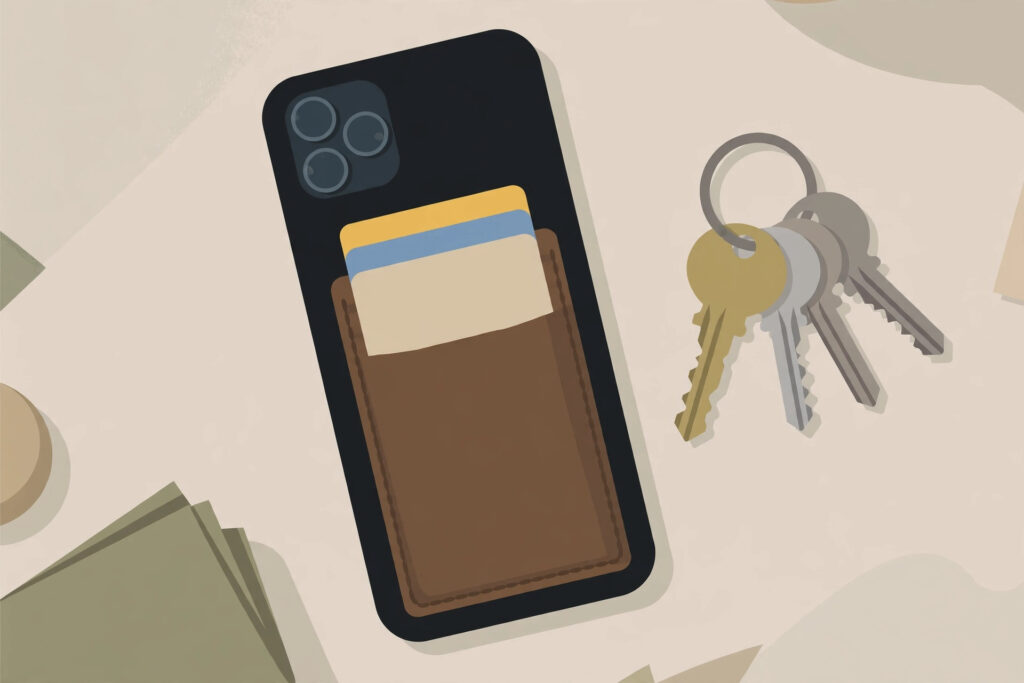
According to ZDNET, its hands-on testing of the most popular MagSafe wallets named the ESR Aura the best overall, a roughly $25 wallet with five card slots, an ID window and a built-in stand. ZDNET also praised Satechi, MOFT and Nomad models for different kinds of everyday carry.
WIRED's 2026 guide to the best MagSafe wallets for everyday carry covers the same ground from a different angle, testing dozens of wallets on an iPhone 17 Pro through the same paces. Its list includes the Oh Snap Snap Grip Wallet, the UAG Metropolis Kevlar wallet, the Moft Trackable Snap-On Wallet, the Pelican Protector, the Journey LOC8 VERSA money clip wallet, the Secrid Cardprotector, the Nomad Slim Horween Leather Wallet, and the ESR Geo Magnetic Wallet Stand Grip, with new models tested alongside long-term favourites.
The market splits into clear types, according to the guides. The Apple FineWoven Wallet holds one to three cards for $59 with Find My built in, the Peak Design Mobile Stand Wallet stores up to seven cards, the Ekster Cardholder Pro holds seven cards for $129 with a pop-up mechanism, and the Spigen Valentinus MagFit keeps three cards as a best-value pick. Everyday I Carry named the BNDT Maverick its best overall, with the strongest magnet tested and room for up to seven cards, after it stayed on the phone through a full day without a single slip.
Why it matters
The MagSafe wallet is a small object that answers a large question: how little can you carry and still have everything you need? A decade ago the answer was a thick leather bifold stuffed with cards, receipts and loyalty schemes. Now it is a slim magnetic slab on the back of a phone holding two or three cards, and the fact that so many people have made the switch says something about how phones absorbed the wallet's job. Payment lives in the phone, identity lives in the phone, and the physical cards that remain are the exceptions, the one card that does not support tap-to-pay, the ID you still need in plastic.
Magnet strength is the specification that matters most and the one most buyers ignore until it fails. A wallet that slides off in a jacket pocket is worse than no wallet at all, because it takes your cards with it. Everyday I Carry's testing put this first: the BNDT Maverick stayed attached through runs, stairs and a jacket pocket, and its magnet held even through a phone case, which most competitors cannot manage. ZDNET's testing reached a similar conclusion from the other direction, praising wallets that balance a strong hold with easy removal for wireless charging. The lesson is to treat magnet strength as a safety feature, not a convenience, and to test it yourself in the first week, when returns are still possible.
Tracking has become the feature that separates the premium wallets from the rest, and it reflects a real anxiety. Nomad's leather wallet has a built-in rechargeable Find My tracker, ESR's Geo wallet adds a rechargeable Find My card for about $40, and MOFT's Find My wallet stand is the first third-party Find My wallet Apple sells in its own stores, with a tracker rated for about six months. Apple FineWoven has Find My built in natively, with no battery to babysit. For anyone who has ever lost a wallet, the appeal is obvious. The trade-off is price and thickness: tracking adds both, and the cheapest wallets, like the $25 ESR Aura, skip it entirely. Buyers should ask themselves honestly how often they misplace things before paying for the feature.
Material is where taste and durability collide. Horween leather, used by Nomad, ages and develops character, which is why leather wallets have loyal fans despite needing more care. Aluminium, used by Ekster and Ohsnap, is nearly indestructible and fans cards out at the push of a button, but it feels cold and technical. Vegan leather, used by ESR and Satechi, is cheaper and more consistent, and the ESR Aura's fun colours show that a wallet can be a fashion choice as well as a tool. There is no right answer, but there is a wrong one: buying a premium leather wallet and then being annoyed that it scuffs, or buying a metal wallet and being surprised that it feels like a tool rather than an accessory.
The stand function is the quiet bonus that many buyers end up valuing most. The ESR Aura, the Satechi wallet, the MOFT AERA and the Peak Design wallet all fold into a stand or a grip, turning the wallet into a phone holder for video calls and videos. That is a genuine everyday benefit, and it explains why ZDNET's best overall pick is a wallet that also works as a stand. The testers at Men's Travel Magazine put dozens of wallets through the same paces on an iPhone 17 Pro, and the ones that survived were those that did more than hold cards. A wallet that also props up your phone earns its place on the back of it.
For buyers choosing now, the decision comes down to three questions: how many cards do you actually carry, do you want tracking, and do you want a stand? Two-card minimalists should look at the Apple FineWoven or the Bellroy Mag Wallet, both three-card wallets with a clean design. Anyone carrying five or more cards should look at the ESR Aura, the Peak Design or the Ekster Cardholder Pro. And anyone who loses things should pay the premium for a Nomad, an ESR Geo or a MOFT with Find My. The worst purchase is the one bought on looks alone, because a wallet that cannot hold your cards, stay on your phone, or be found when lost has failed at its only job.
What to watch next
Watch the new iPhone cycle and the accessory makers that follow it. The 2026 guides were tested on the iPhone 17 Pro, and every new phone brings a new case ecosystem, which can change magnet strength and fit. A wallet that held perfectly on one phone may behave differently on the next, so buyers upgrading their phone should re-test their wallet rather than assuming it still works.
Watch too whether tracking becomes standard rather than premium. With Apple selling a third-party Find My wallet in its own stores, and ESR offering a tracker for about $40, the price of never losing your wallet is falling fast. If tracking reaches the $25 tier, the case for buying a wallet without it becomes very hard to make.
Frequently asked questions
What is the best MagSafe wallet overall in 2026?
ZDNET names the ESR Aura MagSafe wallet and stand as its best overall, at roughly $25, with five card slots, an ID window and a built-in stand. Everyday I Carry names the BNDT Maverick its best overall for the strongest magnet tested.
Which MagSafe wallet holds the most cards?
The Peak Design Mobile Stand Wallet stores up to seven cards, the Ekster Cardholder Pro holds seven cards, and the BNDT Maverick holds up to seven cards, while the Apple FineWoven Wallet holds only one to three.
Which MagSafe wallets have Find My tracking?
The Nomad Leather Mag Wallet has a built-in rechargeable Find My tracker, the ESR Geo has a rechargeable Find My card, the MOFT Find My Wallet Stand is sold by Apple, and the Apple FineWoven Wallet has Find My built in natively.
How many cards should a MagSafe wallet hold?
Most hold three cards, which suits minimalists who pay by phone. If you carry more, look for a five-card wallet like the ESR Aura or a seven-card wallet like the Peak Design or Ekster Cardholder Pro.


