
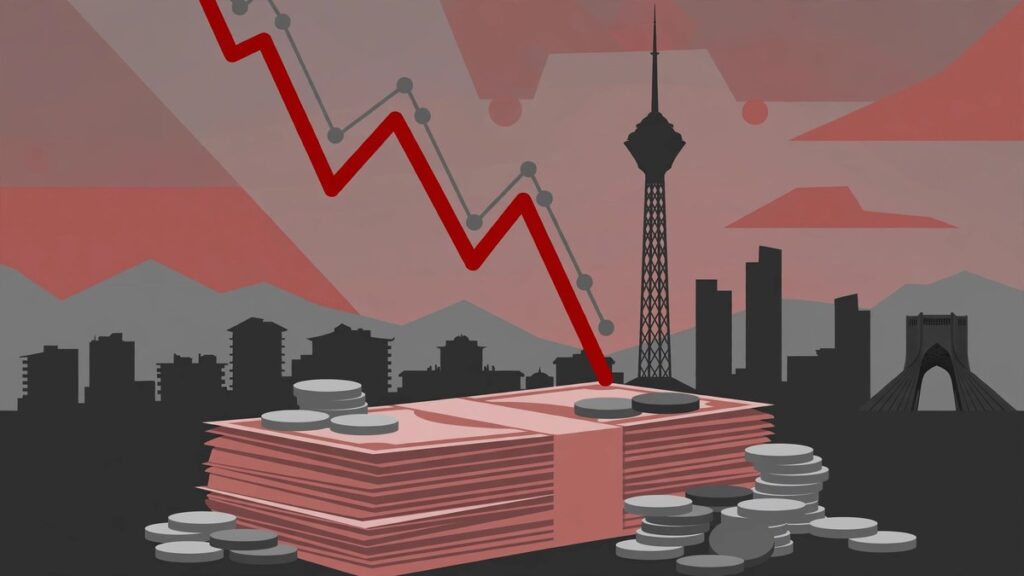
According to Reuters, Iran's currency plunged to a record low on Saturday 28 November, approaching the psychological threshold of 3 million rials to the US dollar. The dollar was sold at around 2.990 million rials, up from 2.938 million on Friday, according to the free-market tracking website bon-bast.com.
Devdiscourse reported that alanchand.com put the rate at 2.997 million rials per dollar, up 1.77 percent, while Capital.com reported a reading of 2.999 million, up 1.83 percent. The slide came amid rising inflation, hardening US sanctions and a widening embargo, with the American naval blockade and a new round of Treasury sanctions tightening the squeeze on Tehran.
Iran's currency plunged to a record low in August, crossing the threshold of 2 million rials to the dollar, while annual inflation reached 66 percent in July, Reuters reported. Clash Report noted that central bank governor Abdolnaser Hemmati said on Saturday that Iran has sufficient hard currency to pay for basic goods and medicine for months to come.
Why it matters
The Iran rial record low matters less as a number than as a psychological break. The dollar fetched about 1.6 million rials in early April, which means the rial has lost about 45 percent of its value in less than eight months, and consumer prices are 88.7 percent higher than a year ago, with food prices more than doubling, according to reporting on the latest figures. When a currency falls that fast, it stops being a financial story and becomes a daily-life story: savings evaporate, imported medicine gets dearer, and every household watches the exchange rate the way other countries watch the weather.
The immediate trigger was a new round of American pressure. On 23 November the US Treasury imposed sanctions on exchange houses, overseas trading firms and the Iran Currency and Gold Exchange Centre, the hub of the official foreign-exchange market. That came on top of the naval blockade of Iranian ports, which Washington reimposed in July and tightened this month with Task Force Iron Gate, and on top of inflation that had already reached 66 percent in July. Each measure on its own would strain a currency; together they have pushed it to the edge of a round number that traders treat as a line in the sand.
The official response so far has been reassurance. Central bank governor Abdolnaser Hemmati said on Saturday that Iran has sufficient hard currency to pay for basic goods and medicine for months to come. That may be true, and it is the message a central banker must give, but it does not address the free-market rate that ordinary Iranians actually use, which is the rate quoted by bon-bast.com and alanchand.com rather than any official figure. The gap between official reassurance and street-level prices is itself part of the crisis, because it tells Iranians that the institutions meant to protect their money cannot.
Timeline: in early April 2026 the dollar fetched about 1.6 million rials on Tehran's open market; in July annual inflation reached 66 percent; in August the rial crossed 2 million per dollar, a record low at the time; on 23 November the US Treasury sanctioned exchange houses, overseas trading firms and the Iran Currency and Gold Exchange Centre; on Thursday 26 November a US aircraft disabled the ship Pacific Archer in the Gulf of Oman for running the blockade; on Saturday 28 November the rial approached 3 million per dollar, with bon-bast.com quoting 2.990 million and alanchand.com 2.997 million; rolling power cuts are due to start on 29 November as gas runs short.
The human cost is already visible in the numbers. Food prices more than doubling in a year means families are eating less well, and the prospect of rolling power cuts from 29 November, as gas runs short, adds a physical hardship to a financial one. Output is shrinking at a pace not seen since the end of the Iran-Iraq War, according to reporting on the economy, which puts the current crisis in a historical frame that Iranians will understand immediately. This is not a market correction; it is a war economy without a formal war, and the people paying for it are the ones with the least cushion.
The rial is also the financial face of the same confrontation playing out at sea and in the air. The same week the currency slid, the US disabled a ship running the blockade, Tehran vowed to keep the Strait of Hormuz shut, and Houthi missiles flew at Saudi Arabia. Each of those events tightens the same vice, and the currency market is where the pressure shows first. As long as the blockade and sanctions hold, there is no obvious mechanism for the rial to recover, which means the next psychological threshold after 3 million may be tested sooner than anyone in Tehran would like.
What to watch next
Watch whether the 3 million mark breaks in the coming days. A breach would be the third record low in four months, after 2 million in August, and it would likely trigger another round of official intervention or new restrictions on currency trading. Also watch the power cuts due from 29 November, which will show whether the energy shortages behind them are a short disruption or a winter-long strain.
Watch for any sign of public unrest or policy change in Tehran. A currency collapse on this scale tests the patience of any population, and the government's options are narrow: spend reserves it says are adequate, tighten controls that push trade further underground, or seek relief it has so far refused to negotiate for. The next statement from the central bank will be read as closely as the exchange rate itself.
Frequently asked questions
How low has the Iranian rial fallen?
On Saturday 28 November 2026 the dollar traded at around 2.990 million rials on the free market, up from 2.938 million on Friday, approaching the psychological threshold of 3 million rials per dollar. The rial had crossed 2 million per dollar in August, also a record low at the time.
Why is the rial falling?
The fall is driven by rising inflation, hardening US sanctions and a widening embargo. On 23 November the US Treasury sanctioned exchange houses and the Iran Currency and Gold Exchange Centre, and the American naval blockade of Iranian ports has tightened the squeeze on Tehran’s economy.
Are these official exchange rates?
No. The figures come from free-market tracking websites such as bon-bast.com and alanchand.com, not from an official central-bank rate. The free-market rate is the one ordinary Iranians actually use for most transactions.
What does the fall mean for ordinary Iranians?
Consumer prices are 88.7 percent higher than a year ago, with food prices more than doubling, and the rial has lost about 45 percent of its value since early April. Rolling power cuts are due to start on 29 November as gas runs short, adding hardship to the financial strain.


