
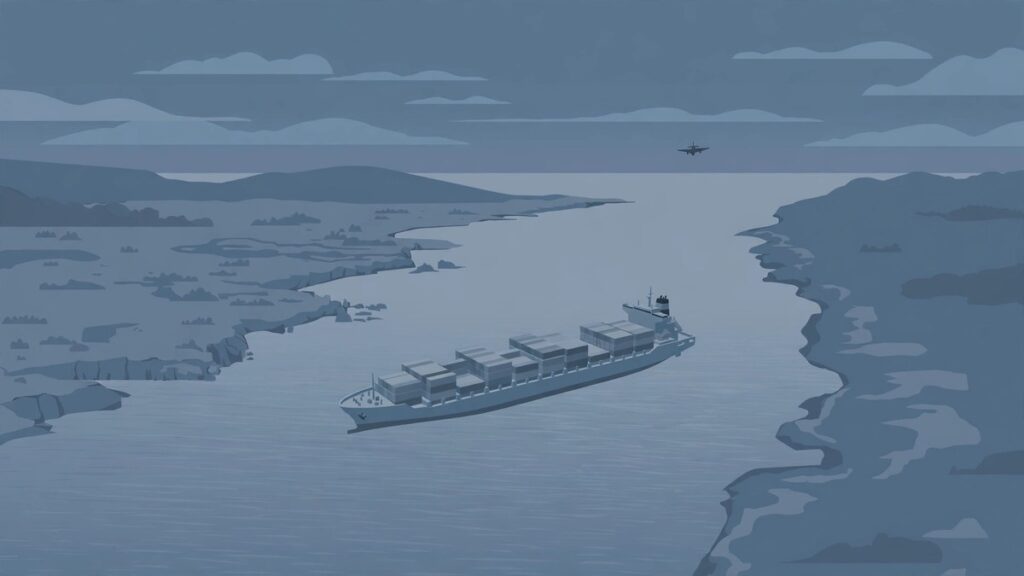
According to Reuters, the US military said on Friday 27 November that it had disabled a ship in the Gulf of Oman after the vessel tried to run the American blockade of Iranian ports. An aircraft fired precision munitions at the stern of the Palau-flagged M/V Pacific Archer on Thursday, disabling its propulsion while the crew stayed unharmed.
The BOE Report, carrying the Reuters dispatch, reported that the Pacific Archer had departed from the Iranian port city of Bandar Abbas before the encounter, and ship tracking websites listed its destination as Singapore. The vessel is at least the 15th disclosed ship to be disabled by the US military since the blockade began in the spring of 2026, and the sixth since the blockade resumed this summer, with the previous vessel disabled on 7 November.
Meanwhile, Mohammad Mokhber, an adviser to Iran's supreme leader, said Tehran would keep the Strait of Hormuz shut and vowed to break the American embargo, according to Iranian state media quoted by Reuters. Mokhber gave no details of how Iran planned to break the blockade. TBS News reported that the US blockade has disabled six ships and redirected 158 others since it resumed, a scale that shows how far Washington has gone to choke off Iranian trade.
Why it matters
The strike itself was deliberately limited, and that is the point. American forces did not sink the Iran blockade ship Pacific Archer or detain its crew; they shot out its propulsion and left it dead in the water. Military.com, carrying the Associated Press account, reported that the Pacific Archer is at least the 15th disclosed vessel disabled since the blockade began in the spring. That pattern shows a doctrine taking shape: disable, deter and publicise, rather than escalate to sinkings or seizures that could hand Tehran a pretext for retaliation. Each disabled ship becomes a floating warning to the next captain weighing whether to test the line.
The economics behind the blockade explain why both sides are raising the stakes. The Strait of Hormuz normally carries about 20 million barrels of oil a day, roughly a fifth of the world's seaborne oil, so any threat to close it moves insurance rates and crude prices within hours. Washington reimposed the naval blockade in July, and earlier this month it announced Task Force Iron Gate to restrict the movement of weapons and sanctioned materials across Iran's land borders and the Caspian Sea as well. The message is that the pressure will not stay at sea, and that every route in and out of Iran is now part of the same campaign.
Tehran's answer, delivered through Mokhber, is a threat that cuts both ways. Keeping the Strait of Hormuz shut would hurt Iran's own oil exports at least as much as anyone else's, which is why the vow reads more as leverage than as a plan. Iran's currency fell to a record low near 3 million rials to the dollar on Saturday 28 November, a reminder that the embargo is already biting hard at home. A government under that kind of economic strain may feel it has little left to lose by threatening the waterway, but actually closing it would invite a military response it cannot afford.
Timeline: the US blockade of Iranian ports began in the spring of 2026; Washington reimposed it in July after a pause; on 7 November American forces disabled the St Kitts-flagged cargo ship M/V Huda in the Gulf of Oman; earlier in November the US announced Task Force Iron Gate to extend enforcement to land borders and the Caspian Sea; on Thursday 26 November a US aircraft struck the stern of the Pacific Archer after it left Bandar Abbas; on Friday 27 November Central Command announced the strike and Mokhber vowed that Iran would break the embargo; on Saturday 28 November the Iranian rial slid to a record low near 3 million per dollar.
The shipping industry is now the quiet casualty of this confrontation. A Palau flag on a bulk carrier leaving Bandar Abbas is a familiar pattern in sanctions-era shipping, where vessels change flags and owners to keep trading with Iran, and each interception raises the cost of that trade. Insurers will price Gulf of Oman voyages higher, charterers will demand premiums for Iranian port calls, and some owners will simply stop going. Over time that attrition matters more than any single strike, because it slowly strangles the very trade the blockade was built to stop.
The wider regional picture makes the next weeks dangerous. The same week brought a US endorsement of Baghdad's crackdown on oil smuggling, fresh Houthi missile attacks on Saudi Arabia, and a record-low Iranian currency, all of them threads of one pressure campaign against Iran and its allies. Each incident on its own is manageable, but together they narrow the space for miscalculation. A disabled ship is a controlled outcome; a misread radar return in the Gulf of Oman, or a Hormuz closure that is tested rather than threatened, would not be.
What to watch next
Watch whether Tehran moves from words to action on the Strait of Hormuz. Any Iranian naval deployment, mine-laying activity or harassment of tankers in the strait would signal that the vow to break the embargo is becoming operational, and oil markets would react before the first ship was stopped. Also watch whether another vessel tests the blockade in the coming days, which would show whether the Pacific Archer strike deterred anyone at all.
Watch Task Force Iron Gate as well. If Washington starts seizing or turning back cargo at Iran's land borders and on the Caspian Sea, the campaign will have moved from a naval blockade to a near-total trade siege, and neighbouring states such as Iraq, Turkey and Azerbaijan will face hard choices about cooperation. The next Central Command statement will say a lot about how far that net is being cast.
Frequently asked questions
What happened to the Pacific Archer?
On Thursday 26 November 2026, a US military aircraft fired precision munitions at the stern of the Palau-flagged M/V Pacific Archer in the Gulf of Oman after it left the Iranian port of Bandar Abbas. The strike disabled the ship’s propulsion, and the civilian crew was unharmed, according to US Central Command.
How many ships has the US disabled under the Iran blockade?
The Pacific Archer is at least the 15th disclosed vessel disabled since the blockade began in the spring of 2026, and the sixth since the blockade resumed in the summer. The previous vessel was disabled on 7 November, and the blockade has also redirected 158 other ships.
Is the Strait of Hormuz closed?
No. Mohammad Mokhber, an adviser to Iran’s supreme leader, said Tehran would keep the Strait of Hormuz shut and vowed to break the US embargo, but he gave no details of any plan. About 20 million barrels of oil a day normally pass through the strait.
What is Task Force Iron Gate?
Task Force Iron Gate is a US effort announced earlier in November 2026 to restrict the movement of weapons and sanctioned materials across Iran’s land borders and the Caspian Sea, extending the pressure campaign beyond the naval blockade of Iranian ports.


