
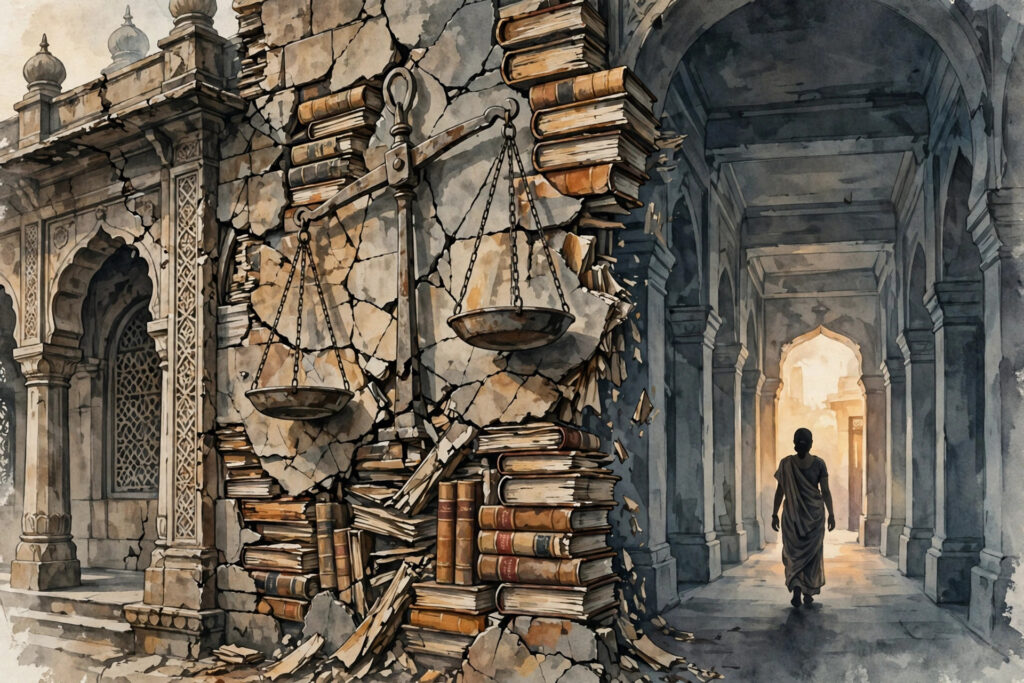
According to Outlook India, millions of women and girls in eight South Asian countries remain unprotected from marital rape because their countries have failed to fully criminalise it, a study by Samaj, a coalition of women's rights groups, has found across the region.
South Asia's marital rape laws lag behind the rest of the world: more than 100 countries have outlawed marital rape, but India, Afghanistan, Sri Lanka and Bangladesh remain among roughly three dozen countries that have not, the study says. The Maldives is the only South Asian country where rape within marriage carries the same penalty as any other rape, while Nepal and Bhutan have criminalised it but impose lighter punishments. Intimate partner violence in the region is 35% higher than the global average.
The laws largely stem from British colonial rule, according to Ranjeeta Silwal of Equality Now, a global women's rights group that is part of Samaj. The exception dates to 1860 in India and Bangladesh and 1885 in Sri Lanka, and rests on the assumption that a woman consents to sex by getting married. Pakistan removed the marital rape exemption in 2006, but no higher court has confirmed that rape laws apply to non-consensual sex within marriage, and a recent high court ruling gave husbands broad protection. In Afghanistan, the Taliban have steadily rolled back protections for women since returning to power in 2021, and a new penal code introduced in January does not mention marital rape at all.
In India, ten petitions challenging the marital rape exception are pending before the Supreme Court, with final hearings due to begin on 9 December. The Indian government, religious groups and men's rights organisations have opposed the petitions, arguing criminalisation would be excessively harsh. Rights groups in Bangladesh have also challenged the exception as violating constitutional rights to life, liberty and protection from torture. In Bhutan, marital rape is a petty misdemeanour punishable by one month to one year; in Nepal, a husband faces up to five years, against six to twenty years for other rape.
Why it matters
The study's power comes from its scope: Samaj, a coalition of women's rights groups in the region, compared the laws of eight South Asian countries rather than looking at one in isolation, and the comparison makes the pattern impossible to ignore. More than 100 countries have outlawed marital rape, yet four of South Asia's largest countries, India, Afghanistan, Sri Lanka and Bangladesh, have not, and two more, Nepal and Bhutan, punish it more lightly than other rape. The region is not merely behind the global trend; on this question it is moving in a different direction from most of the world.
The roots of the gap are old, and that is part of the problem. The marital rape exception in India and Bangladesh dates to 1860 and in Sri Lanka to 1885, laws written under British colonial rule that treated a wife's consent to sex as given by the marriage itself. Ranjeeta Silwal of Equality Now told the BBC that the idea comes from the belief that consent for sex is implied in marriage, and that it shows women are still treated as property in a deeply patriarchal system. Independence did not sweep these laws away, and more than a century later they still decide whether a married woman in much of South Asia can call forced sex a crime.
The argument used to defend the exception has barely changed either. Opponents say criminalising marital rape would undermine the family unit, break families apart, offend religious and cultural values, and open the door to false accusations against men. Those claims explain why governments and parliaments have resisted change, but they are the same claims made in other countries before they changed their laws, including Britain, which criminalised it in 1991 without the family collapsing, and the false-accusation argument has not stopped other countries from treating forced sex as rape whoever commits it.
The study also warns that changing the law is necessary but not enough. Nepal and Bhutan have criminalised marital rape, yet the punishment is far lighter: in Bhutan it is treated as a petty misdemeanour punishable by one month to one year, and in Nepal a husband faces up to five years where other rape carries six to twenty. Pakistan removed the exemption in 2006, yet no higher court has confirmed rape laws apply inside marriage, and a recent high court ruling gave husbands broad immunity. A law that exists on paper but is never enforced, or is enforced at a discount, leaves women almost as unprotected as no law at all.
Afghanistan shows the other end of the spectrum, where the law is not merely absent but actively hostile. Since the Taliban returned to power in 2021, protections for women have been steadily dismantled, and a new penal code introduced in January does not mention marital rape at all. Under that code, a husband can be prosecuted for violence against his wife only if he causes a broken bone, an open wound or severe bruising, and even then faces just 15 days in prison. That is not a gap in the law; it is a statement about whose safety the law is for.
India is where the argument will be decided next, and it is the country to watch. Ten petitions challenging the exception are pending before the Supreme Court, with final hearings due to begin on 9 December, and judges have already delivered contradictory rulings, some calling the law archaic and urging parliament to change it. The Indian government has opposed the petitions, calling criminalisation excessively harsh, and religious groups and men's rights organisations have joined that opposition. Whatever the court decides, the case has already forced a public argument many would have preferred to avoid.
What to watch next
The immediate date is 9 December, when the Indian Supreme Court begins final hearings on the ten petitions challenging the marital rape exception. The hearings will test whether the court will strike down a colonial-era exception parliament has refused to remove; the judgment, whenever it comes, will set the terms for the whole region.
Watch also for the challenges beyond India. Rights groups in Bangladesh are arguing that the exception violates constitutional rights to life, liberty and protection from torture, and Samaj's study gives campaigners across the region a common set of facts to work with. The question is whether the region's governments will keep treating marriage as a place where consent ends, or whether the Maldives, the one country that punishes it like any other rape, becomes the model rather than the exception.
Frequently asked questions
What is the marital rape exception?
It is a rule in the rape laws of several countries that says a husband cannot be prosecuted for raping his wife, because marriage is treated as giving consent to sex. In India and Bangladesh the exception dates to 1860 and in Sri Lanka to 1885, and it remains in force in those countries today.
Which South Asian countries have not criminalised marital rape?
India, Afghanistan, Sri Lanka and Bangladesh have not criminalised it at all, according to the Samaj study. Nepal and Bhutan have criminalised it but impose lighter punishments, Pakistan removed the exemption in 2006 but its courts have not confirmed it applies inside marriage, and the Maldives alone punishes it like any other rape.
Why do governments and campaigners disagree about changing the law?
Opponents, including the Indian government, religious groups and men’s rights organisations, say it would be excessively harsh, undermine the family and offend cultural and religious values. Women’s rights groups say marriage does not give a husband the right to sex without consent, and that forced sex is rape whoever commits it.
Does changing the law guarantee justice for survivors?
Not on its own, the study warns. In Bhutan it is a petty misdemeanour punishable by one month to one year, and in Nepal a husband faces up to five years against six to twenty years for other rape. Enforcement, reporting and stigma matter as much as the law itself.
What happens next?
India’s Supreme Court is due to begin final hearings on 9 December on ten petitions challenging the marital rape exception. Rights groups in Bangladesh have also challenged the exception in court, and the Samaj study is likely to be cited in campaigns across the region.


