
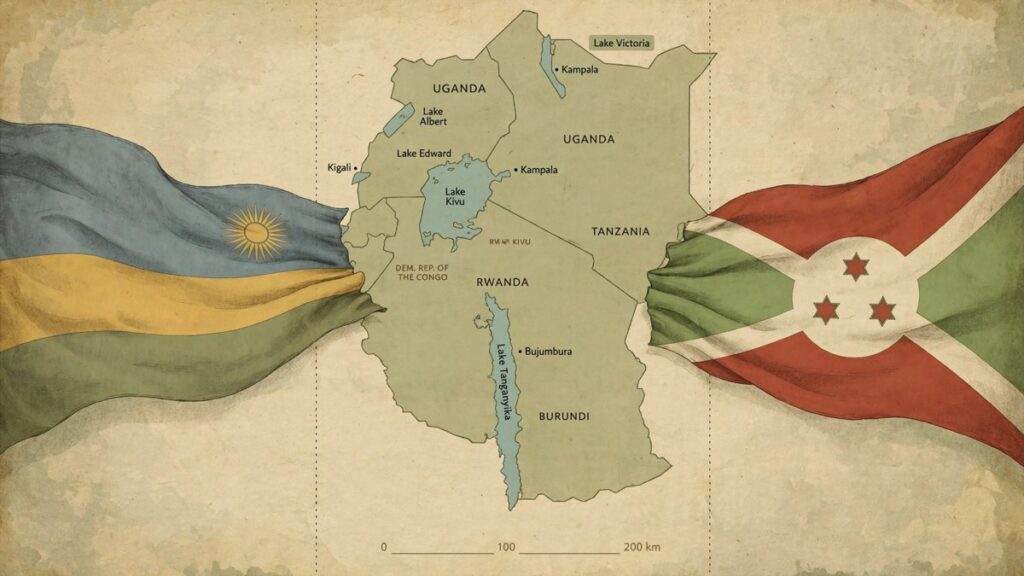
According to the BBC, the Democratic Republic of Congo has summoned Uganda's top diplomat in Kinshasa after General Muhoozi Kainerugaba, Uganda's military chief and the son of President Yoweri Museveni, appeared in social media posts to support a rebel takeover of Walikale in North Kivu.
The DR Congo Uganda row centres on a series of posts on X by General Kainerugaba, in which he threatened that Uganda would capture Walikale itself if the Front pour la refondation de la nation, known as the FRN and led by former President Joseph Kabila, delayed. The BBC reported that Gen Kainerugaba threatened a rebel takeover of a mineral-rich area in DR Congo in controversial X posts. His X account, which had nearly 1.4 million followers, has since become inaccessible.
The DR Congo foreign ministry said the remarks were particularly serious, had caused a major media incident, and undermined the restraint that must prevail between sovereign states. It said the Congolese government expects Uganda to clarify its official position and take the necessary measures to prevent such transgressions from recurring. The EastAfrican reported that Kinshasa is demanding clear explanations from the Ugandan authorities, and that Uganda's government had not publicly responded.
Why it matters
The DR Congo Uganda row is about a social media post, but the stakes are territorial, and that is why Kinshasa reacted as it did. Walikale is a mineral-rich territory in North Kivu province, in the east of the Democratic Republic of Congo, and a foreign general appearing to endorse its capture by a rebel movement is not a joke, even if the general later deletes the post or deactivates the account. Sovereignty, as the Congolese foreign ministry put it, cannot suffer any breach, including on digital platforms. The medium is new; the claim at the heart of it, that another country's army might take a town, is as old as war itself.
The general's own explanation adds to the confusion rather than clearing it up. In his posts, General Kainerugaba insisted that Uganda's military involvement was purely driven by security concerns, and he accused the Democratic Forces for the Liberation of Rwanda, known as the FDLR, of targeting members of the Bahima ethnic community around Walikale. He also criticised the reported presence of foreign mercenaries in DR Congo. The EastAfrican noted that the Ugandan army has been conducting joint military operations with the Congolese army for nearly five years to hunt down the Allied Democratic Forces, a Ugandan armed group operating in North Kivu and Ituri. A general who is both a partner in a joint operation and a public cheerleader for a rebel takeover is a partner whose intentions are impossible to read, and that uncertainty is dangerous in a region already full of armed groups.
There is a timeline that shows this is not a one-off outburst. In 2024, DR Congo summoned Uganda's diplomatic representative after the general made threats against foreign mercenaries operating in eastern DR Congo. In February last year, he threatened to seize the eastern Congolese city of Bunia, claiming that members of the Bahima ethnic community were being attacked. In the latest episode, the Congolese foreign ministry said in a statement on Wednesday that it had summoned Uganda's head of mission in Kinshasa, and the general's X account, which had nearly 1.4 million followers, has since become inaccessible. Ugandan diplomats often distance themselves from the general's controversial posts, arguing that they do not sum up the official government position, according to The EastAfrican.
The pattern matters because it repeats across borders. The general's posts have previously sparked diplomatic tensions, and the same account has been at the centre of earlier rows, including threats that caused a diplomatic crisis with Kenya in 2022, according to reporting on the latest dispute. When a senior military officer with a large public following repeatedly uses social media to threaten neighbouring countries, the question is no longer whether each post is official policy. The question is whether a state can credibly claim that its most senior general speaks only for himself, and whether its neighbours should believe that claim when troops are already deployed on their soil.
For the people of eastern DR Congo, the dispute is not abstract. Walikale sits in a province where armed groups, mineral wealth and foreign military involvement have overlapped for years, and where a rumour of a takeover can move markets, displace families and change the calculations of every armed group in the area. The Congolese government said it remained committed to regional peace and stability, while defending its dignity and institutions against provocation or interference. That sentence is the whole dilemma in miniature: Kinshasa wants cooperation with Uganda against shared enemies, and it also wants Uganda to stop threatening its territory. Both things cannot be true at the same time unless Kampala clarifies its position.
What to watch next
Watch whether Uganda responds, and what form that response takes. A formal statement from the Ugandan government, a statement from the Uganda People's Defence Forces, or a public comment from General Kainerugaba himself would each carry a different weight, and silence would leave Kinshasa to decide whether to escalate the dispute on its own.
Watch the joint operations against the Allied Democratic Forces, and whether they continue unchanged. If cooperation on the ground survives the diplomatic row, the dispute may stay a war of words. If it frays, the security vacuum in North Kivu and Ituri will be filled quickly, and not by the people who want peace.
Frequently asked questions
What did General Muhoozi Kainerugaba post?
In a series of posts on X, he appeared to support a rebel takeover of Walikale in North Kivu by the FRN, led by former President Joseph Kabila, and threatened that Uganda would capture Walikale itself if the FRN delayed. He also accused the FDLR of targeting Bahima people and criticised foreign mercenaries in DR Congo.
How did DR Congo respond?
DR Congo summoned Uganda’s head of mission in Kinshasa, called the remarks particularly serious, and demanded that Uganda clarify its official position and take measures to prevent such statements recurring.
Who is General Muhoozi Kainerugaba?
He is Uganda’s Chief of Defence Forces and the son of President Yoweri Museveni. His social media posts have previously sparked diplomatic tensions, including threats against Bunia in eastern DR Congo and a diplomatic crisis with Kenya in 2022.
Has Uganda responded to DR Congo’s demand?
No. Uganda’s government had not publicly responded by late Wednesday, according to The EastAfrican, and the Uganda People’s Defence Forces had issued no statement. The general’s X account, with nearly 1.4 million followers, has since become inaccessible.


