
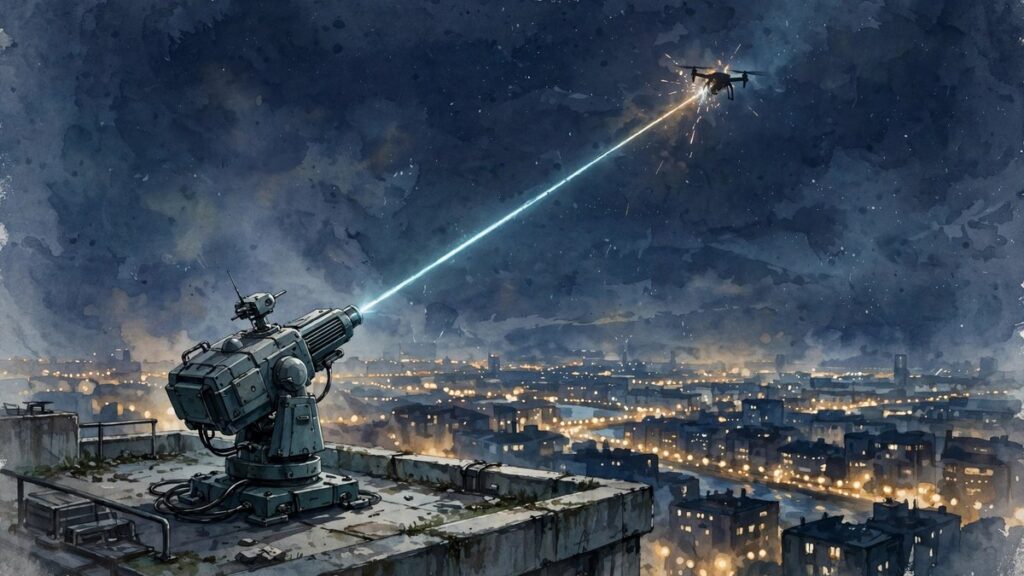
According to Forbes, Ukraine has used a ground-based laser to shoot down a Russian jet-powered Shahed drone, in what Kyiv calls a historic first. The Ukrainian system, called Blysk, claimed the kill recently while guarding a critical infrastructure site, according to Serhii 'Flash' Beskrestnov, a military adviser to President Volodymyr Zelensky.
Beskrestnov shared details and a video on his Telegram account on 25 November, describing the interception as the first combat result of the Blysk air defence laser, built by Ukrainian defence technology firm Carmine Sky. Forbes reported that Blysk is a smaller system, estimated at about 4 kilowatts with a range of perhaps 1 kilometre, and was first deployed earlier in November.
Ukraine began testing laser air defence systems over the summer, and Blysk was placed on combat duty in Kyiv in early November. Beskrestnov cautioned that it is still too early to talk about serial production, and the reported interception has not been independently confirmed.
Why it matters
The laser downs drone claim matters because of the economics of the drone war. Russia's jet-powered Shaheds, known in Russia as Geran, are faster and harder to intercept than the propeller-driven versions, and Ukraine has been spending expensive missiles to shoot down cheap drones. A laser that costs little per shot and never runs out of ammunition, if it works, flips that arithmetic. It is why Kyiv is calling the interception a world first, and why Moscow will be watching the claim as closely as Kyiv's allies.
The limits are real and Beskrestnov does not hide them. Blysk fires a 4-kilowatt beam with a range of up to one kilometre, and burning through a Shahed's hull takes several seconds, according to Carmine Sky, seconds in which the target is moving at more than 450 kilometres per hour, according to Ukraine's military intelligence, which says the jet-powered Geran-5 flies as high as about 6 kilometres. In its first days on duty the system hit nothing, because cloud and fog over Kyiv scatter a laser beam. The weapon is experimental, still in testing, and not ready for mass production.
The verification caveat matters as much as the claim. The account rests on a single statement from a presidential adviser on Telegram, with a video he shared; Clash Report noted that Beskrestnov did not say when or where the shootdown happened, and no independent confirmation has been reported. That does not make the claim false, wartime announcements are often the first word, not the last, but it means the 'world first' label is Kyiv's, not the world's, until someone else sees the wreckage or the footage is authenticated.
The programme moved fast. Ukraine began testing laser air defence systems over the summer; Blysk was placed on combat duty in Kyiv in early November, with early results limited by autumn weather; on 19 November Carmine Sky told BBC News Ukraine the system fires a 4-kilowatt beam with a range of up to one kilometre; and on 25 November Beskrestnov announced the first combat kill. The system was developed under the state's Private Air Defense programme, with support from the Brave1 defence tech cluster, which Beskrestnov said about 100 Ukrainian companies have joined.
What to watch next
Watch for a second interception. One kill is an announcement; two or three, at different sites, would be evidence the system works in combat rather than in a single lucky engagement. Also watch whether Kyiv moves toward serial production. Beskrestnov's caution suggests the decision is months away, not weeks.
Watch the Russian response. If jet-powered Shaheds start flying higher, faster, or with reflective coatings, it will be a sign Moscow takes the laser threat seriously. And watch other militaries: a proven cheap laser kill would accelerate laser programmes far beyond Ukraine, from the Gulf to the Pacific.
Frequently asked questions
What is the Blysk laser?
Blysk, meaning ‘glimmer’, is a Ukrainian ground-based laser air defence system built by defence technology firm Carmine Sky. It fires a 4-kilowatt beam with a range of up to one kilometre and is designed to protect critical infrastructure.
What did Ukraine shoot down with it?
According to presidential adviser Serhii ‘Flash’ Beskrestnov, a jet-powered Russian Shahed drone, known in Russia as Geran, was shot down while the laser guarded a critical infrastructure facility.
Is the claim confirmed?
No. The interception has not been independently confirmed, and Beskrestnov did not say when or where it happened. He shared details and a video on Telegram on 25 November.
When will Ukraine mass-produce the laser?
Not yet. Beskrestnov said it is still too early to talk about serial production, with tests continuing while the lasers protect critical infrastructure.


