
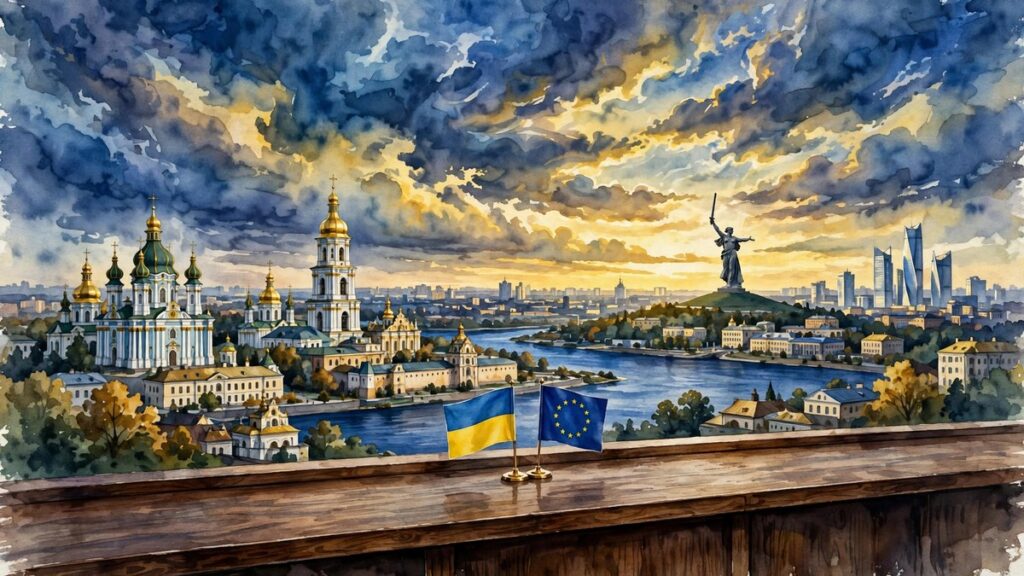
According to the BBC, Ukrainian President Volodymyr Zelensky told the broadcaster in Kyiv that it was 'strange' for Donald Trump to call Vladimir Putin a friend, saying the Russian leader is an aggressor and a killer who cannot be a friend. Zelensky also said Washington is too focused on the Middle East and is not pushing Russia hard enough.
The interview, conducted by the BBC's Sarah Rainsford at Zelensky's central Kyiv office and published on 26 November, ranged far beyond the friendship remark. Zelensky said delays in delivering vital anti-ballistic missiles are costing Ukrainian lives, adding that the missile deficit 'is people's lives', and he confirmed that Starlink and its military version Starshield remain restricted in occupied areas of Ukraine.
Trump posted a photograph on Truth Social on Saturday showing himself embracing Putin with the caption 'my friend', days after the two men met in Shenzhen, China, on 19 November. Trump has defended the language as diplomacy, saying his rapport with Putin is a negotiating tool and that he has been very tough on Russia. The BBC reported that Zelensky compared calling Putin a friend to calling Adolf Hitler a friend during the Second World War.
Why it matters
The row over the Trump Putin friendship is about much more than a photograph. For Kyiv, the word 'friend' is a political signal: it tells Moscow that the American president sees Putin as a partner to deal with rather than an aggressor to pressure, and it tells Ukrainians that their suffering may be negotiable. Zelensky chose to say so in English, in his own office, on camera, a deliberate decision to speak past the diplomats and directly to Washington and its voters.
The substance behind the complaint is the missile shortage. Zelensky said Ukraine's military can now destroy about 70 per cent of Russia's fastest drones, a figure he said was improving, but the country is struggling to defend its skies as Russian ballistic missiles target power stations and bridges and jet-powered drones are launched daily at Kyiv and other big cities. Ukrainian drone units have told the BBC their interceptor drones can no longer catch up with Russian Shaheds, which then fly deeper into Ukraine unhindered. With recent attacks on Kyiv's bridges over the Dnipro apparently aimed at cutting the city in two, and power cuts forcing businesses to close, Zelensky acknowledged that Ukraine is bracing for a difficult and dangerous winter.
The peace process gives Zelensky little comfort. Trump's two envoys have been trying to negotiate a peace deal between Russia and Ukraine, but Zelensky said they often seem more in tune with Moscow's position than Kyiv's. The latest round of talks, mediated in Abu Dhabi earlier in November, made no obvious progress, with Zelensky summing it up as 'The more we know, the more problems', and he said talks were expected to resume in December, though it was unclear whether European negotiators would be at the table, as the US envoys had announced, because the Kremlin appears to be resisting. From Kyiv's account, Russia appears to have regressed to its initial hardline negotiating positions.
The timeline matters. On 19 November Trump met Putin in Shenzhen, China, and publicly called him 'my friend'; on Saturday he posted the embracing photograph on Truth Social; on Thursday 26 November Zelensky gave his BBC interview in Kyiv; and peace talks are expected to resume in December. In the same interview Zelensky defended this week's sinking of the Russian warship Merkury, docked in eastern Libya, and the BBC reported that at least nine people were killed last Friday in Russian strikes on bridges in Kyiv and railway stations in western Ukraine.
There is also a quieter frustration underneath the public one. Zelensky said a deal for 48 Patriot air defence missiles has been sitting unsigned on US Defence Secretary Pete Hegseth's desk, according to Newsweek as reported by Wisevoter, and he described the Starlink question as 'ping pong', with each side blaming the other. Since a bruising encounter with Trump in the Oval Office in 2025, Zelensky has been careful in how he handles relations with the United States, which makes this open criticism, in English, all the more striking.
What to watch next
Watch the December talks: whether they happen at all, whether European negotiators are at the table, and whether Moscow brings anything new or simply restates its opening positions. The more immediate test is the missile pipeline, whether the Patriot deal moves and whether anti-ballistic missile deliveries speed up before the winter strikes intensify.
Watch Trump's language too. If he keeps calling Putin a friend while also pressing for a quick deal, Kyiv will read the friendship as the policy. If the tone hardens after Zelensky's rebuke, it may signal that the White House heard the complaint. Either way, the next Truth Social post will be read in Kyiv as carefully as any diplomatic cable.
Frequently asked questions
What did Zelensky say about Trump calling Putin a friend?
He told the BBC it was ‘strange’, saying Putin is ‘an aggressor, and a killer’ who ‘can’t be a friend’, and compared it to calling Adolf Hitler a friend during the Second World War.
Why is Zelensky frustrated with the United States?
He said the US is too focused on the Middle East, is not pushing Russia hard enough in peace talks, and is too slow delivering vital anti-ballistic missiles, a shortage he said is costing Ukrainian lives.
What did Trump say about his relationship with Putin?
Trump has defended his warm language as diplomacy, saying his rapport with Putin is a negotiating tool and that he has been very tough on Russia.
When will Ukraine-Russia peace talks resume?
Zelensky said talks were expected to resume in December, after the latest round mediated in Abu Dhabi earlier in November made no obvious progress.


