
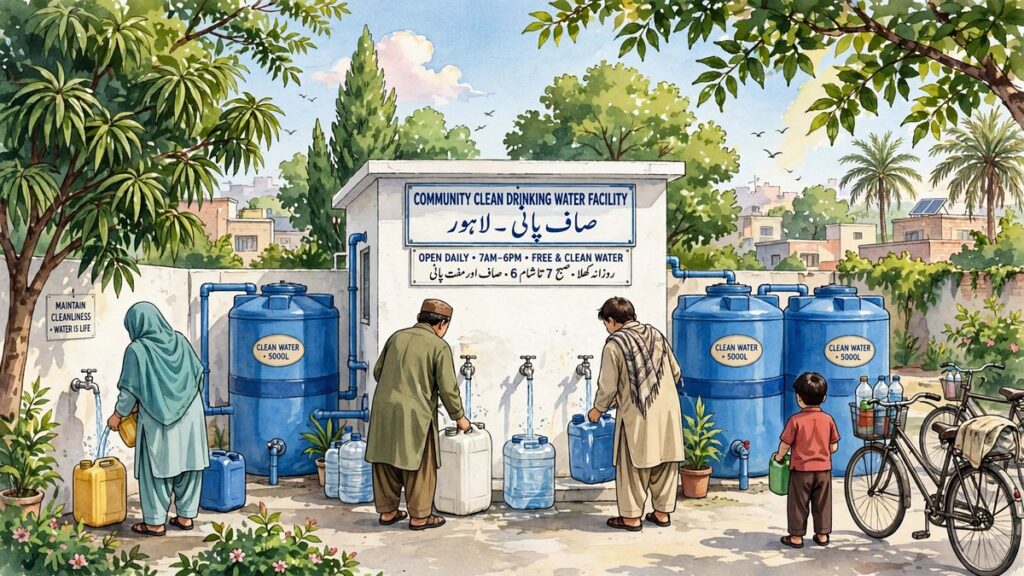
Nestlé Pakistan has opened its 11th Clean and Safe Drinking Water Facility in Gulshan-e-Ravi, Lahore, inaugurated by Rana Mashhood Ahmad Khan, chairman of the Prime Minister's Youth Programme, and Jason Avanceña, Nestlé Pakistan's chief executive, according to Startup Pakistan. The plant should serve about 10,000 people daily.
Each facility uses ultrafiltration and a multistage treatment system, including sedimentation, filtration and disinfection, to remove contaminants and pathogens from the water, according to Startup Pakistan. Nestlé Pakistan says it has already built 10 similar facilities near its manufacturing sites, milk collection centres and raw material sourcing areas, each serving more than 10,000 people a day, so the network as a whole now reaches more than 100,000 people.
Speaking at the ceremony, Rana Mashhood Ahmad Khan said access to clean and safe drinking water was fundamental to community wellbeing and praised Nestlé Pakistan's efforts. Jason Avanceña said water was a shared resource fundamental to thriving communities and a sustainable future, while Sheikh Waqar Ahmad, Nestlé's head of corporate affairs and sustainability for Pakistan and Afghanistan, said the company remained committed to addressing local water needs through sustained engagement.
Why it matters
Why it matters: the facility is small against the scale of Pakistan's water problem, and that is precisely why it is worth examining. Pakistan faces serious public health challenges around water availability and quality, worsened by population growth and climate change, and the World Health Organization identifies unsafe drinking water as a major source of waterborne disease. One plant serving 10,000 people does not fix that, but a network of 11 plants serving more than 100,000 people a day is a working model, and working models are what other companies and local governments can copy.
The interesting part is the business logic behind it. Nestlé Pakistan places these facilities around its own value chain, near factories, milk collection points and sourcing areas, under its Caring for Water-Pakistan initiative, which covers factories, communities and agriculture. That alignment is the point: the company is not donating a plant in a random location, it is investing in the communities its own operations depend on, and it says the programme supports United Nations Sustainable Development Goals 6, 13 and 17. Critics will call that self-interest dressed as charity, and supporters will say self-interest is exactly what makes it sustainable, because a project tied to a company's own supply chain is less likely to be abandoned when budgets tighten.
The public-private shape of the launch matters too. The inauguration was led jointly by a government youth programme chairman and a multinational's chief executive, at a ceremony attended by the federal minister for the Board of Investment, Qaiser Ahmed Sheikh, as chief guest, along with diplomats, industrialists and media. That kind of ceremony signals that the state wants corporate help with basic services, and that companies want the state's public blessing for it. The risk is that ribbon-cuttings substitute for accountability: the test of this facility is not the opening ceremony, it is whether the taps still run, the filters are still maintained and the water is still tested a year from now.
Timeline: 14 November 2026 — The AZB reports the opening of the Gulshan-e-Ravi facility, expected to serve about 10,000 people a day. 23 November 2026 — Startup Pakistan publishes its report on the inauguration by Rana Mashhood Ahmad Khan and Jason Avanceña.
What to watch next
Watch whether Nestlé Pakistan publishes water quality results from the Gulshan-e-Ravi plant over time, and whether the network grows beyond 11 facilities. A maintenance and testing record would turn a good opening into a credible programme.
Watch also whether other large companies in Pakistan adopt the same model of building water facilities around their own operations. If they do, the 100,000 people reached so far could become a much larger number, and the debate will shift from whether corporate water projects work to who should pay for them.
Frequently asked questions
Where is Nestlé Pakistan’s 11th clean water facility?
It is in Gulshan-e-Ravi, Lahore, and it was inaugurated by Rana Mashhood Ahmad Khan, chairman of the Prime Minister’s Youth Programme, and Jason Avanceña, chief executive of Nestlé Pakistan.
How many people will the facility serve?
About 10,000 people a day, according to Nestlé Pakistan. Each of its 11 facilities serves more than 10,000 people daily, so the network reaches more than 100,000 people in total.
How does the facility clean the water?
It uses ultrafiltration and a multistage treatment system, including sedimentation, filtration and disinfection, to remove contaminants and harmful microorganisms.
Why is clean water a health issue in Pakistan?
Pakistan faces major challenges with water availability and quality, worsened by population growth and climate change. The World Health Organization identifies unsafe drinking water as a major source of exposure to waterborne diseases.


