
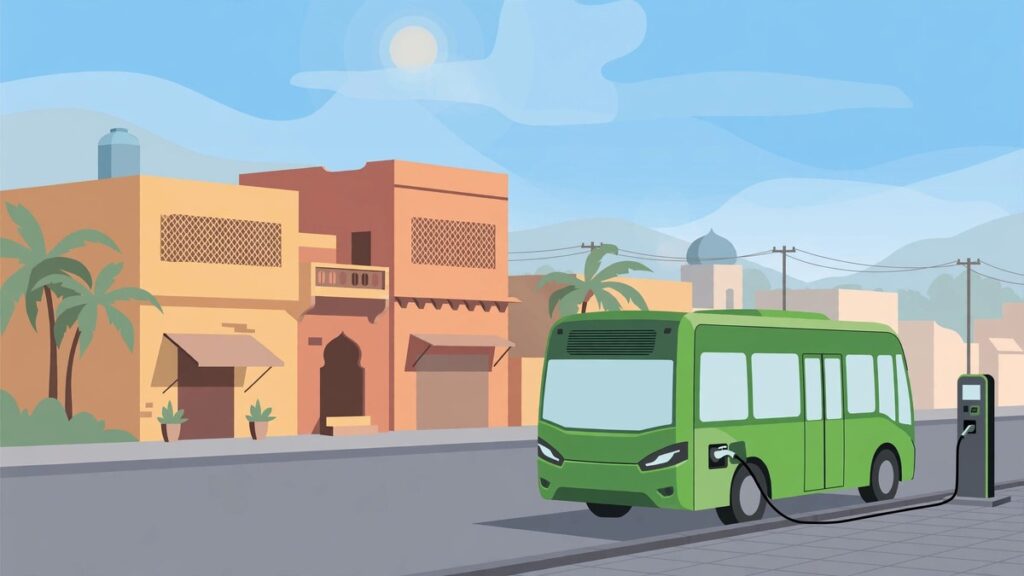
A young man from Sahiwal has built an electric bus at a cost of about 4.5 million Pakistani rupees, Startup Pakistan reports. The bus runs on a fast-charging lithium-ion battery that takes four hours to charge, and on a full charge it can travel about 180 kilometres, with the builder saying a few finishing touches remain.
The builder expects future buses to cost less to make than this one, according to the report. Jeevey Pakistan also covered the build, describing the young man as having impressed many by developing the bus at an estimated cost of Rs4.5 million.
Startup Pakistan notes that it could not be independently confirmed when or where the builder made the remarks, and the builder has not been named in the reports. The story comes as Punjab's government expands electric bus services, with Chief Minister Maryam Nawaz Sharif inaugurating an electric bus project in Sahiwal and 30 electric buses allocated to the city, Business Insider reports.
Why it matters
If the figures hold up, the build is a striking example of what small-scale engineering can do. Video reports circulating with the story describe the vehicle as a 22-seater bus, built for about Rs 4.5 million with a 180-kilometre range, which is the kind of project that would normally need a factory, a supply chain and a development budget. That one young builder in Sahiwal has apparently done it in a workshop changes the conversation about who gets to build the future of transport in Pakistan.
The timing helps the story land. Punjab's government is already rolling out electric buses, with Chief Minister Maryam Nawaz Sharif inaugurating an electric bus project in Sahiwal, fares set at 20 rupees, and 30 electric buses allocated to the city, Business Insider reported in 2025. A locally built bus, even a one-off, fits directly into that programme's logic: if the province is buying electric buses anyway, the question of whether they can be built locally, and more cheaply, becomes a live policy question rather than a hobby.
The caveats matter as much as the celebration, though. Startup Pakistan itself says it could not independently confirm when or where the builder made his remarks, and the reports do not name him. A bus that works in a video and a bus that can safely carry passengers every day are different things, and questions about crash safety, battery certification, braking, and road approval have not been answered in the reporting so far. The honest reading is that this is a promising prototype, not a product, and its value is in what it proves about local skills rather than in the vehicle itself.
That skills question is the real story. Pakistan has a large pool of young people with practical engineering ability and very few formal routes into the electric vehicle industry. A build like this, if it is genuine, shows that the gap is not talent but support: access to batteries, motors, controllers, testing facilities and honest feedback. The next step is not applause but a test, and the institutions that could provide one, from universities to the provincial transport department, now have a reason to look.
What to watch next
Watch whether the builder is identified and whether any official body inspects or tests the bus. A road test, a safety check or a university assessment would turn a viral story into a verified one.
Watch whether the builder produces a second bus, and at what cost. He expects future builds to be cheaper, and if a second bus appears at a lower price, the claim that local builds can undercut factory prices starts to look serious.
Frequently asked questions
How much did the Sahiwal electric bus cost?
About Rs 4.5 million, according to Startup Pakistan, with the builder expecting future buses to cost less.
How far can it travel on one charge?
About 180 kilometres on a full charge, from a fast-charging lithium-ion battery that takes four hours to charge.
Who built it?
A young man from Sahiwal. The reports do not name him, and Startup Pakistan says it could not independently confirm when or where he made the remarks.
Is Sahiwal already getting electric buses?
Yes. Punjab Chief Minister Maryam Nawaz Sharif inaugurated an electric bus project in Sahiwal, with 30 electric buses allocated to the city and fares set at 20 rupees, Business Insider reported.


