
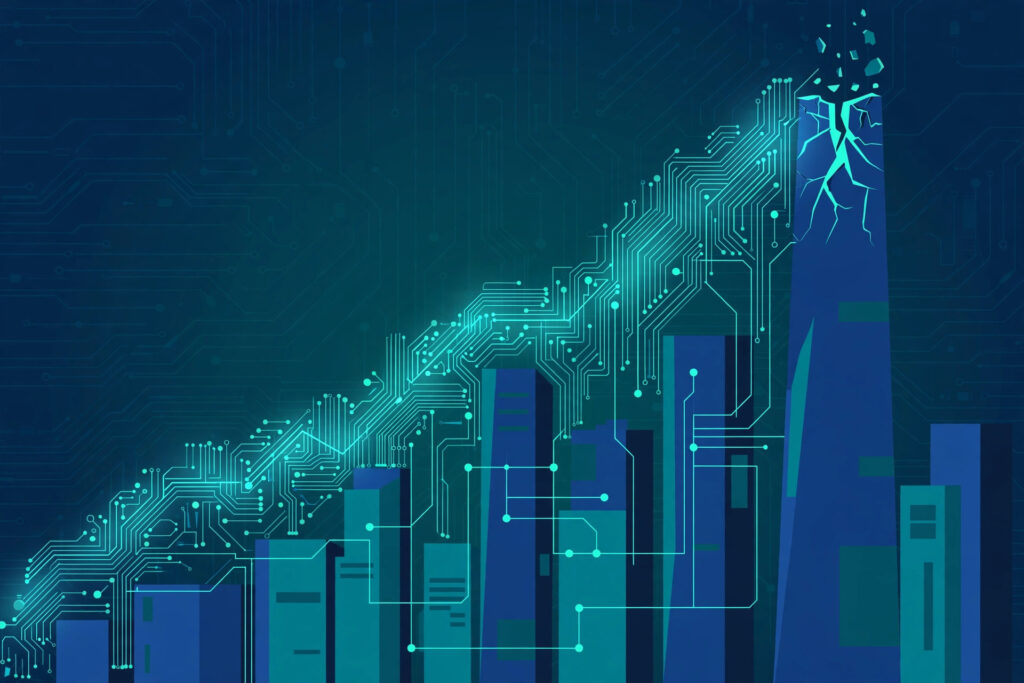
San Francisco is living through the San Francisco AI boom that has revived its downtown, filled offices and pushed rents and house prices up, yet many people inside the industry now worry the surge is overheated and a sharp correction could follow.
OpenAI and Anthropic are based in the city, thousands of AI start-ups have formed there, and one study found that 60 percent of all venture capital invested in American AI companies between 2023 and 2025 went to firms in San Francisco. Office vacancies have fallen, AI adverts cover buses and billboards, and the city has recovered from the pandemic exodus that emptied its centre.
The warnings have grown louder in recent weeks. The International Monetary Fund warned last month of a possible significant downward correction in AI share prices and a big fall in investment. One worker at a large AI company told the BBC he was certain the house of cards will come down, while another said a major correction was totally possible.
Why does this boom feel different from the last ones?
San Francisco's revival is real, but it rests on a narrower base than previous tech booms. AI companies employ relatively few people in the city compared with the dotcom or social media waves, because much of the money goes into computing power and data centres built elsewhere. The city is, in the words of one economist, the brain centre of the AI boom rather than its factory floor. That means the boom's benefits arrive through high salaries and spending, not through mass hiring.
That structure cuts both ways in a downturn. Fewer direct tech jobs would be lost than in earlier crashes, and the city remains about 35,000 jobs below its pre-pandemic peak, so there is less distance to fall. But the pain would land on the service economy that has grown around AI workers: restaurants, shops, dog-walking firms and other small businesses that have hired staff and bought vans to serve office dogs and busy engineers. The chief economist of the city has warned that the spillover into service jobs would be the main effect of a correction.
The deeper anxiety is about whether the spending behind the boom can ever pay for itself. AI companies are pouring enormous sums into models, chips and data centres, often funded by debt, while cheaper models from China raise questions about how much revenue the leading firms can sustain. When workers inside the industry say they doubt the spending is justified, it is not idle pessimism; it is the people closest to the technology questioning its business model.
There is also a cushion that did not exist in earlier cycles. Healthcare and tourism are growing in San Francisco, and the city's economy has not been roaring even during the boom, so its chief economist describes a slowdown as a likely hiccup rather than a collapse. The honest picture is neither euphoria nor doom: a city transformed by one industry, unusually exposed to that industry's mood, but with more than one string to its bow.
What should you watch next?
Watch AI share prices and venture funding over the next few months, and whether start-ups begin cutting staff or office space. A funding slowdown would show up in San Francisco's rental market and in the small businesses that serve AI workers before it shows up in national statistics.
Watch whether tourism and healthcare keep growing fast enough to offset any tech pullback, and whether city officials use the boom years to build reserves and diversify, rather than assuming the AI money will keep flowing.
Frequently asked questions
Why is San Francisco booming again?
AI companies, led by OpenAI and Anthropic, are based there, and 60 percent of US AI venture capital from 2023 to 2025 went to San Francisco firms, lifting rents, offices and local spending.
Why do people fear an AI crash in San Francisco?
The IMF warned of a possible sharp correction in AI share prices, and some AI workers doubt the huge spending on models and data centres can be justified by revenue.
Would a crash hit San Francisco harder than Silicon Valley?
Possibly, because the boom is concentrated in the city itself, though AI firms employ relatively few people there, which may limit direct job losses.
What could cushion the city if AI spending falls?
Growing healthcare and tourism, plus modest overall tech job growth, may soften the blow, though service businesses that depend on AI workers would still suffer.


