
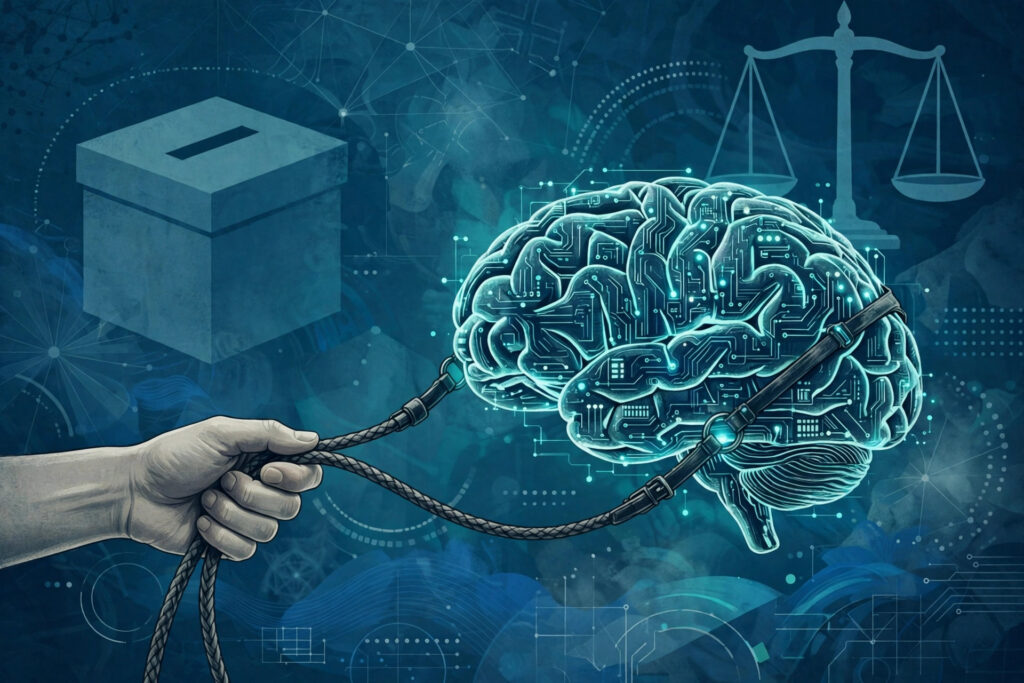
Anthropic chief executive Dario Amodei has rejected claims that he wants humanity to surrender free will to AI, calling the suggestion absurd in a long post on X on 25 November. He said AI should be governed through democratic processes, and that handing political power to machines would be as wrong as autocracy.
Amodei wrote that we should never sacrifice legitimacy or self-determination at the altar of efficiency or security, and that the argument against autocracy applies word for word against governance by AI. He said his published essays, including Machines of Loving Grace and The Adolescence of Technology, repeatedly call for AI to strengthen democratic institutions and for humans to retain ultimate decision-making power.
The statement follows a growing chorus from Anthropic rivals suggesting human agency could be at risk if AI is developed irresponsibly. OpenAI chief executive Sam Altman said people should continue to have agency over the future, while Meta chief AI officer Alexandr Wang wrote that society should not accept a handover to AI. Amodei drew a line at recursive self-improvement, saying it may not be safe for Claude to build successive frontier models fully autonomously without meaningful human supervision, even though Claude already authored more than 80 percent of code merged into Anthropic's codebase in June.
Why is the line between automation and surrender so hard to draw?
Amodei's argument rests on a distinction that sounds clear in a sentence and blurs in practice. Automating a specific task, such as driving a car or designing a cancer drug, is different from handing over political decisions, and few people would disagree. The difficulty is that the tasks keep getting bigger: writing end-to-end software, running a research lab, and eventually building the next generation of models. At some point, a collection of specific automations adds up to a system that makes decisions humans no longer fully understand, and Amodei himself acknowledges that risk when he calls for limits on recursive self-improvement.
The charge of vibes-based positioning cuts both ways. Amodei accuses rivals of using phrases like human control and agency as marketing slogans while building the same automation as everyone else, and there is truth in that: every frontier lab is releasing more capable models, and every one claims to understand the risks. But Anthropic is not exempt from the same criticism. Its own models already write most of its code, and its business depends on customers trusting Claude with ever more autonomous work. The difference between Anthropic and its rivals is therefore a matter of degree and of stated intent, not of a fundamentally different product.
The Axios report that prompted Amodei's post is itself a reminder of how much of this debate happens through anonymous sources and second-hand summaries. Axios reported that some Anthropic employees believed humanity would safely hand authority to superintelligent systems, and often should, rather than fight for control. Amodei says no careful reader of his writing could conclude he believes that, and he points to hundreds of pages of essays on democratic governance. Both things can be true: a chief executive can hold one view while some employees hold another, and the public debate should be about the company's actual policies, not about a slogan attributed to it.
What matters most is the practical line Amodei draws at recursive self-improvement, the process by which AI builds successive frontier models with little human supervision. He says Anthropic does not expect it to be safe for Claude to do that fully autonomously, and that meaningful human supervision is required. That is a concrete commitment, and it can be tested against what Anthropic actually does in its own research. If Claude keeps writing more of Anthropic's code while the company insists humans remain in control, the test will be whether that supervision is real or merely a label on a process that has already slipped beyond it.
What should you watch next?
Watch whether Anthropic publishes concrete limits on recursive self-improvement in its own research, and how it measures meaningful human supervision when models are already writing most of its code. A principle without a measurable rule is hard to hold anyone to.
Watch also the wider debate among AI leaders. If Altman, Wang and Amodei all claim to defend human agency while building increasingly autonomous systems, the public will judge them by what their products actually do, not by what their essays say.
Frequently asked questions
What did Dario Amodei say?
He called the suggestion absurd in a long post on X on 25 November, saying no careful reader of his writing could conclude he believes in surrendering free will to AI.
What prompted Amodei’s post?
An Axios report examined disagreements among technology leaders and cited people familiar with internal discussions at Anthropic.
What distinction does Amodei draw?
Amodei said there is a difference between automating specific tasks, such as driving or designing drugs, and surrendering political governance to AI.
What is recursive self-improvement?
Recursive self-improvement is AI improving itself without human assistance, and Amodei said Anthropic does not expect it to be safe for Claude to build successive frontier models fully autonomously.
What did Amodei say about rival AI companies?
He accused rivals of vibes-based commercial and political positioning, using phrases like human control and agency while building the same automation as everyone else.


